
Artist Biography
Melanie Ruela is a senior Interior Architecture student at Endicott College and will continue her education with Endicott’s fifth year masters program in Interior Architecture. From a young age, she has always had a passion for design, which has evolved into a more focused and thoughtful design practice. Throughout her studies, she has grown both as a student and a designer, gaining a deeper understanding of how thoughtful spaces influence the way people live and feel. Her work reflects a balance of creativity, problem solving, and attention to detail, along with involving the ability to merge aesthetics with function.
Melanie’s Portuguese background draws significant inspiration from her culture, where art, craftsmanship, and a strong sense of home are deeply valued. This has shaped her creative perspective and continues to fuel her passion for the arts and design. She is particularly drawn to residential and hospitality design. Her goal is to create spaces that feel warm, meaningful, and connected to those who are experiencing them.
Thesis Abstract
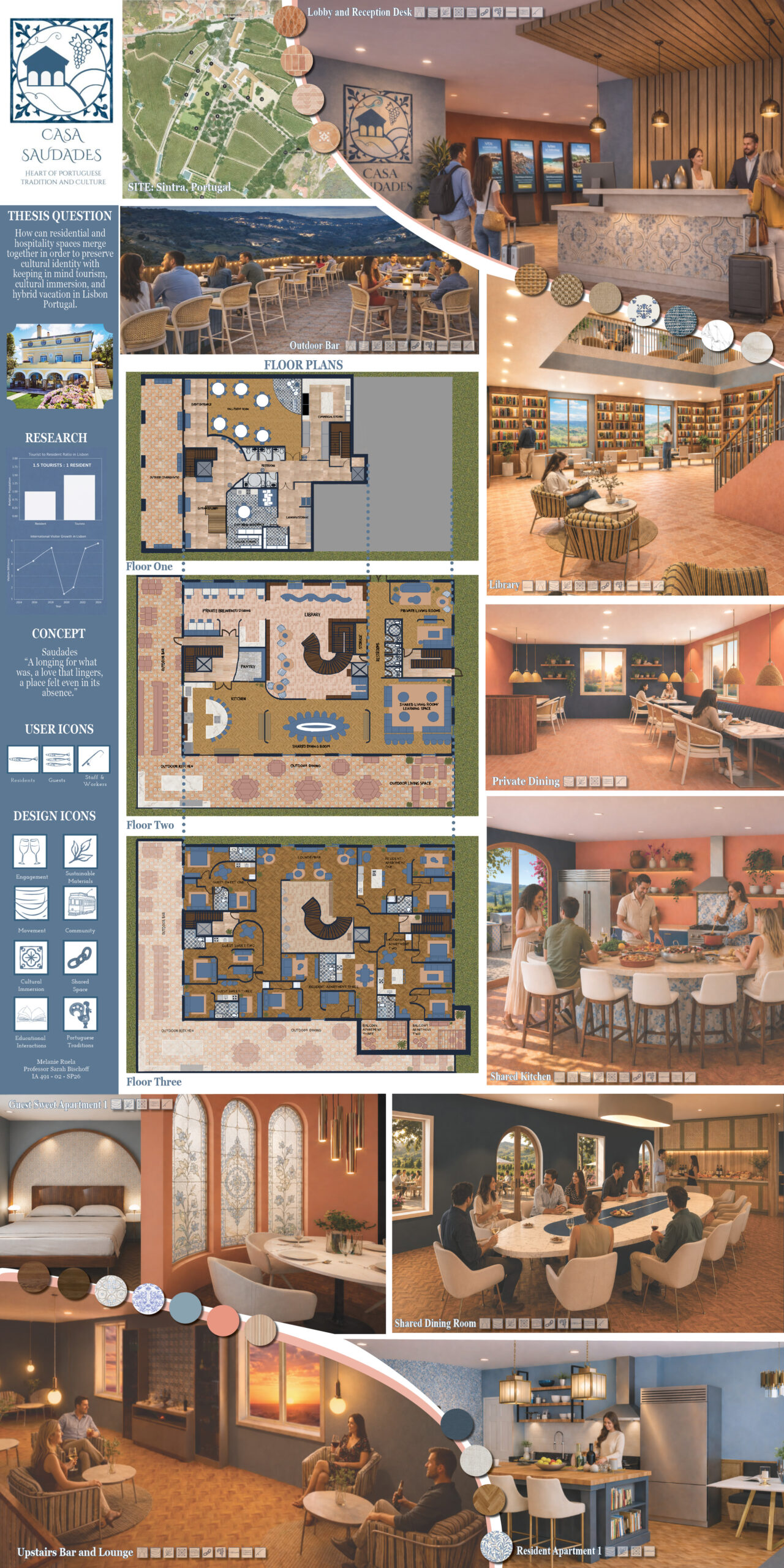
Casa Saudades is not just a resort, but an immersive cultural resort that is located in Sintra, just outside of Lisbon Portugal. This resort is rooted in the traditions and lived experiences of Portuguese culture. This project explores how residential and hospitality spaces can merge to preserve cultural identity while responding to the growing demands of tourism, cultural immersion, and hybrid vacationing living in Lisbon, Portugal.
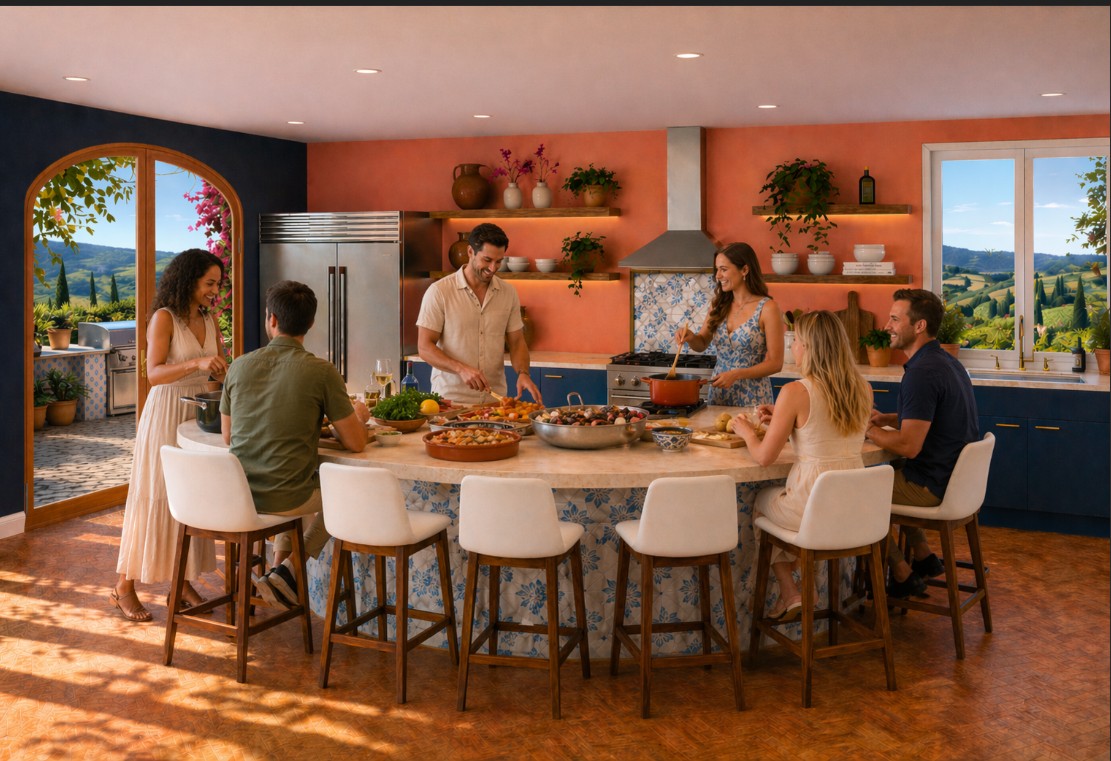
As tourism in Lisbon continues to expand beyond a temporary presence now exceeding the local population and placing increasing strain on housing and infrastructure, this proposal offers an alternative model for engagement. Casa Saudades reimagines hospitality as a shared, lived experience rather than a transactional one. Designed as a small scale resort, it brings together travelers and local residents to participate in everyday cultural practices such as cooking, language, music, dance, and storytelling.
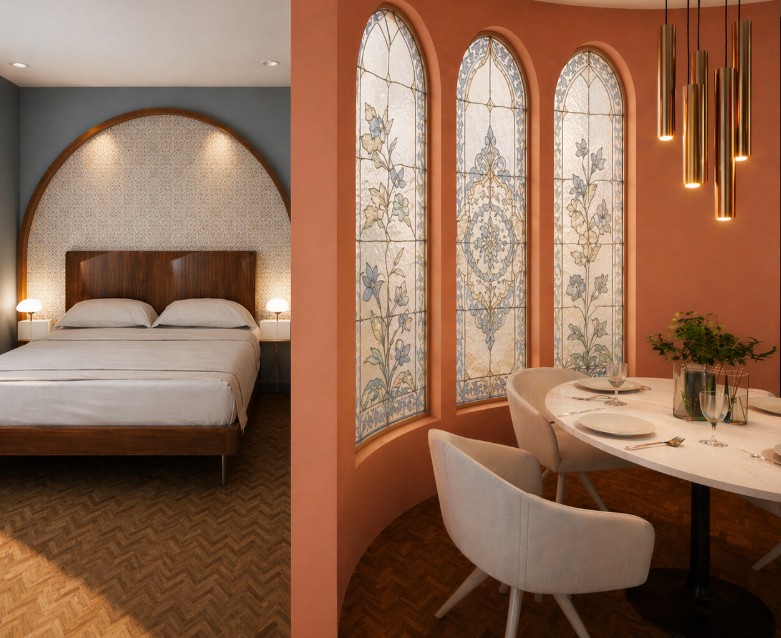
Grounded in respect, curiosity, and community, the design fosters a two way cultural exchange where culture is not performed, but lived and shared. Portuguese materials and architectural vernacular are integrated throughout the space to evoke a sense of continuity and identity, while spatial transitions balance privacy and openness reflecting values of close family connection and personal independence. Landscape is woven into the design to encourage gathering and shared cultural experiences, creating opportunities for connection and reflection. Through education, conversation, and immersive storytelling, Casa Saudades communicated both the spoken and unspoken values of Portuguese life. Ultimately the project proposes a new approach to tourism, one that prioritizes authenticity, cultural preservation, and meaningful human connection.