


Artist Biography
Gina is graduating this spring of 2026 from Endicott College with a B.F.A in Interior Architecture. She has consistently been recognized for her academic achievements, earning a place on the Dean’s List for multiple semesters, and being a member of both the Kappa Pi Honors Society and Mortar Board National Honors Society. During her time at Endicott College, Gina completed four internships in residential design, where she built a strong foundation in professional practice, collaboration, and technical skills. After graduation, she plans to begin her career as a residential interior designer, while also pursuing her real estate license to expand her professional path.
Thesis Abstract
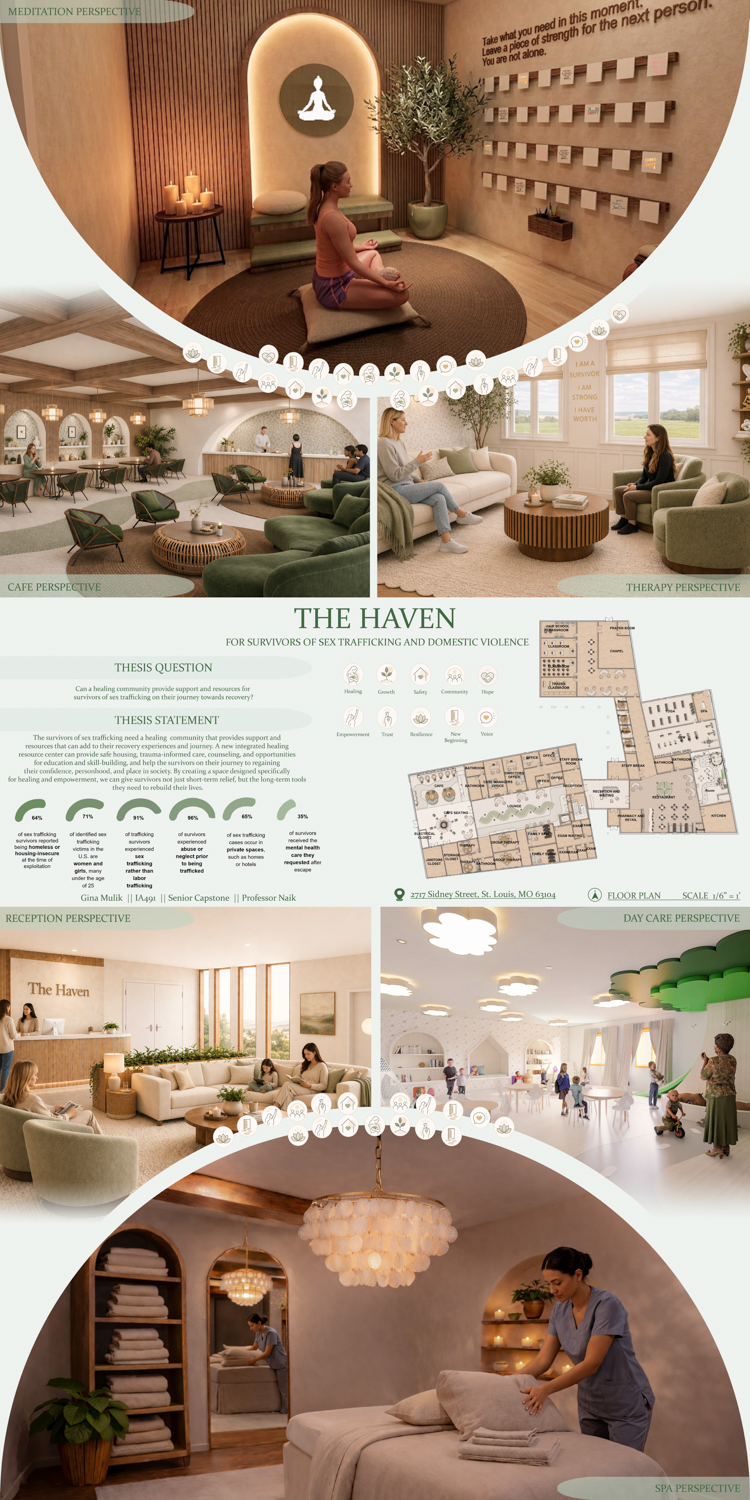
The Haven explores how interior architecture can actively support the recovery of survivors of sex trafficking and domestic violence through the design of trauma-informed healing environments. Grounded in research on trauma bonding, housing instability, and gaps in survivor aftercare, the project identifies a critical need for spaces that move beyond temporary shelter to provide long-term emotional, psychological, and social support. Survivors often face environments that are sterile, restrictive, or retraumatizing, limiting their ability to rebuild autonomy and trust.
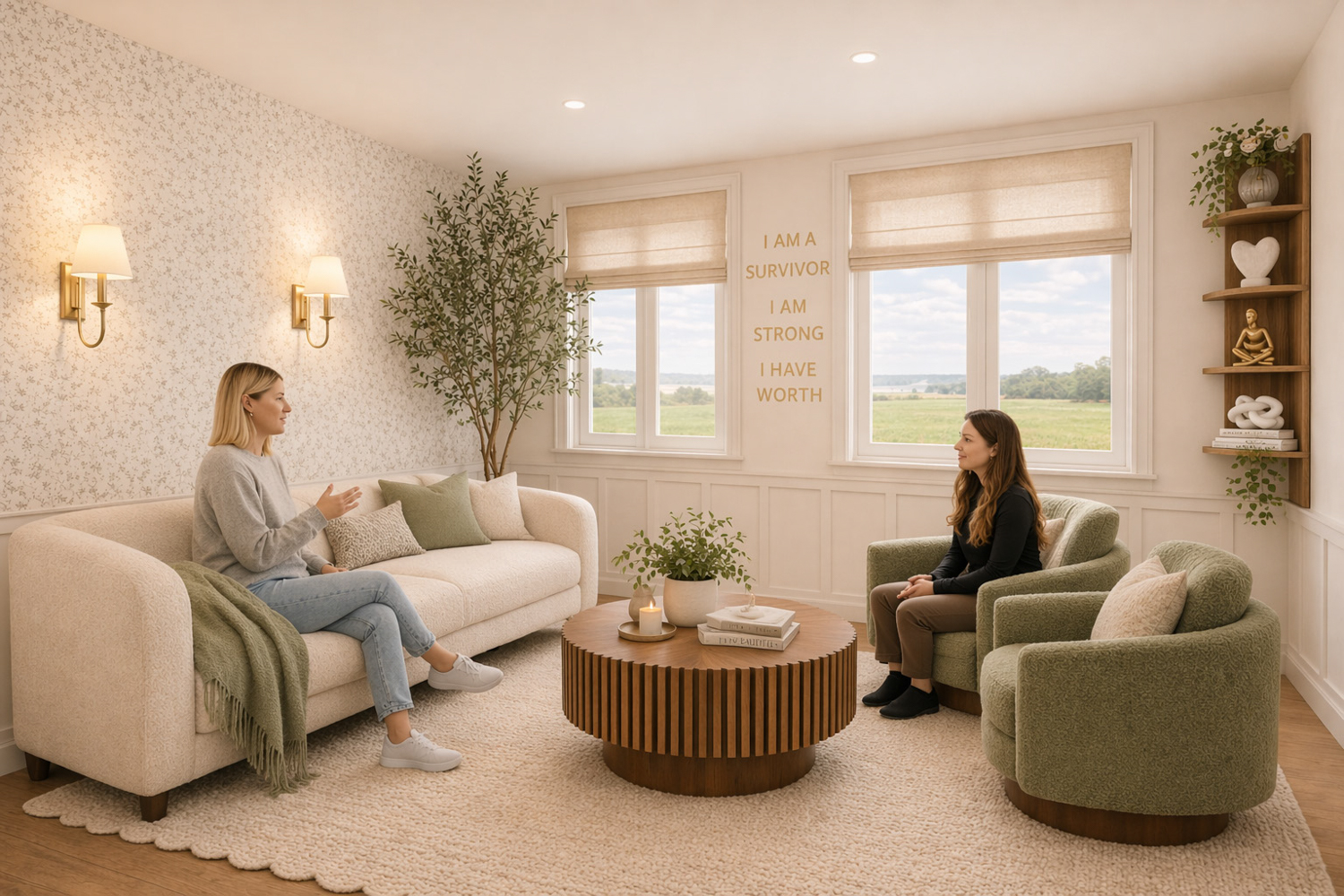
In response, The Haven is a healing community designed to foster safety, dignity, and empowerment. The design integrates a range of therapeutic and communal spaces. These spaces include counseling areas, meditation rooms, childcare facilities, café-style social zones, and spa environments which create layered environments of care that supports both individual healing and community connection. Guided by trauma-informed design principles, the project emphasizes natural light, soft materials, sensory calmness, spatial choice, and clear wayfinding to restore a sense of control and reduce anxiety. The inclusion of flexible, user-centered spaces allows survivors to engage at their own pace, supporting both privacy and social interaction. By reframing architecture as an active participant in the healing process, this thesis demonstrates how thoughtfully designed environments can transform recovery from a fragmented experience into a supportive, empowering journey. Ultimately, The Haven positions interior design as a form of advocacy; one that restores dignity, fosters resilience, and creates meaningful pathways toward long-term healing.