
Artist Biography
Originally from Madison, Connecticut, Ella Scarice is an interior architecture student at Endicott College whose work is grounded in creating thoughtful, human centered spaces. While her thesis, The Sand Project, explores how after-school environments can act as supportive “third places” for middle school students, her long-term goal is to focus on residential interior design, creating homes that feel both elevated, livable and loved. Her designs are shaped by her home in coastal New England, influencing her use of soft color palettes and natural textures. During her study abroad experience in Florence, Ella expanded her understanding of global design, working on projects like a jazz bar and residential spaces. However, being abroad also meant she missed the opportunity to engage in a studio project more closely related to schools and education spaces, which is why she chose to design an after school program.
Through her internship experience in residential design, Ella has developed strong skills in material selection, space planning, and client-centered thinking. She is especially interested in creating homes that not only look beautiful but support everyday routines, comfort, and well-being. Her work reflects a balance between creativity and practicality, with a focus on designing spaces people love.
Thesis Abstract
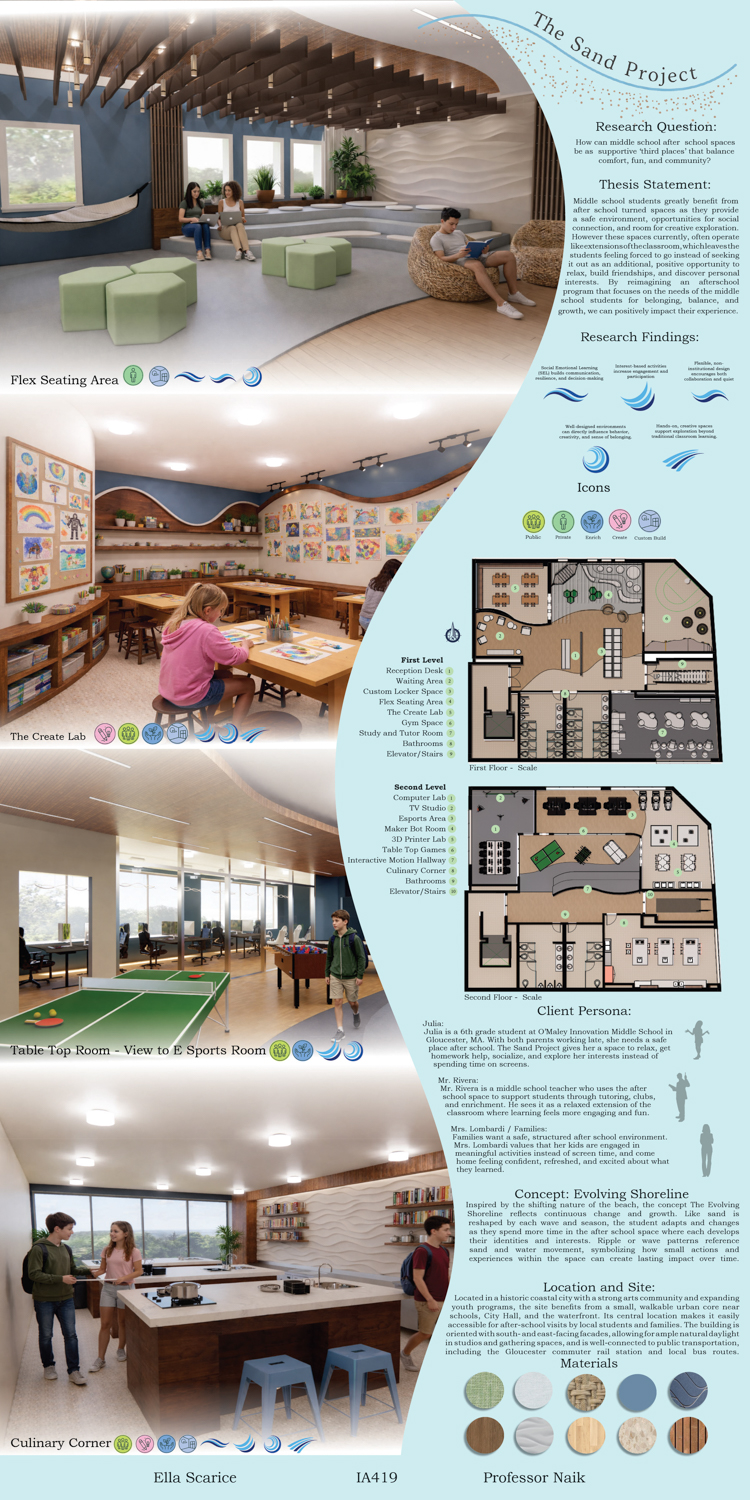
This thesis explores how after-school environments for middle school students can be reimagined as supportive “third places” that exist between home and school. Titled The Sand Project, the design creates a message on how quality interior architecture can foster emotional well-being and a sense of belonging during early adolescence. Grounded in research on social and emotional learning and third space theory, The Sand Project responds to the need for safe,and flexible environments for youth outside of traditional classroom settings.
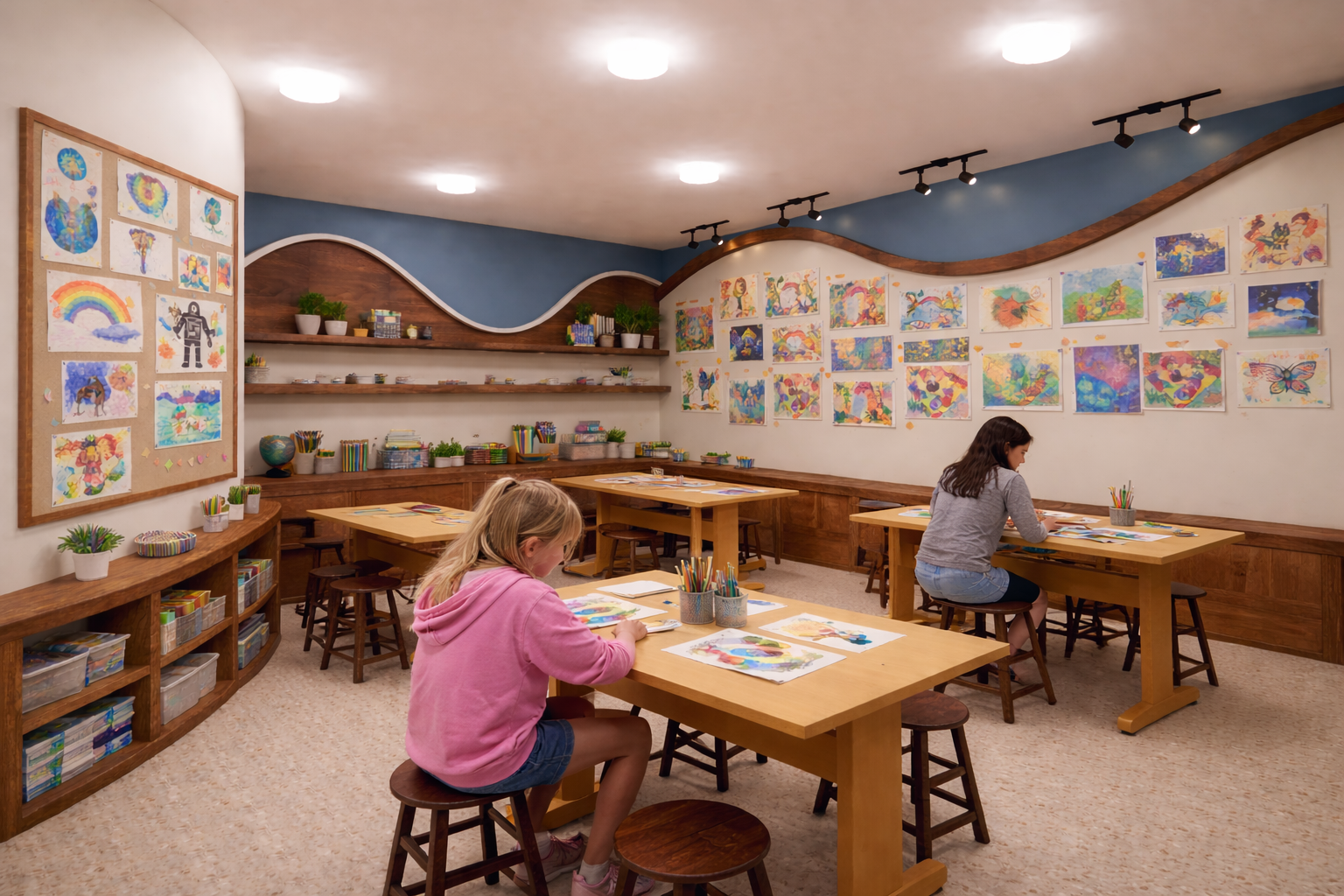
Inspired by the evolving shoreline of the New England coast, the design uses concepts such as rounded formations and ripple patterns to inform spatial organization and user experience. These ideas are translated into flexible layouts, layered seating zones, and a balance between open social areas and more private spaces. Program elements include collaborative learning zones, creative rooms, quiet study areas, and informal social spaces that enforce a range of activities.
Through a combination of research, conceptual development, and spatial design, this thesis demonstrates how interior design can go beyond function and aesthetics to support the emotional and social development of middle school students. The Sand Project ultimately proposes a new model for after-school design that prioritizes inclusivity and a strong sense of community where students feel the urge to go to after school centers.