
Artist Biography
Elizabeth (Liz) Kuderko, a designer from East Haddam, CT, is finishing her senior year at Endicott College. Over four years, she developed a solid design foundation through academic studies and hands-on experience. Before Endicott, she earned her interior design certification from the New York Institute of Art and Design, furthering her interest.
Liz’s passion for design started young, working with her father, a contractor, from the age of 12. This gave her practical insights into construction that influence her approach today. Throughout her studies, Liz has been on the Dean’s List all four years and is part of Endicott’s Kappa Pi chapter.
Her education and experiences shaped a thoughtful design approach that blends creativity with functionality. She aims to grow professionally and personally. Outside work, Liz stays active, spends time with family, and shops. As she builds her career, she’s eager to bring passion and fresh perspective to design.
Thesis Abstract
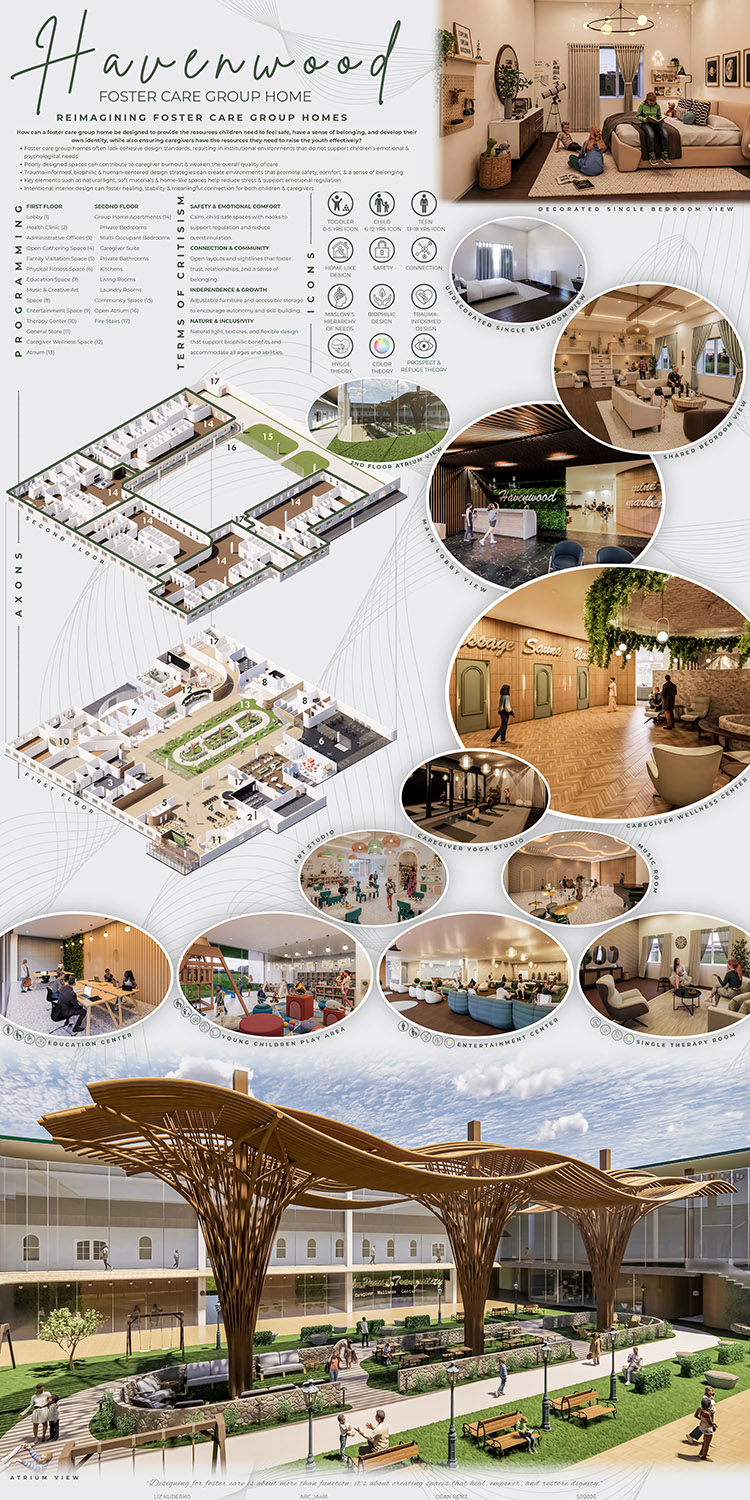
This thesis project explores how intentional interior design can transform foster care group homes into spaces that better support the emotional, psychological, and developmental needs of both children and caregivers. Titled “Havenwood,” the project responds to the lack of consistent design standards in many foster care facilities, which often creates institutional environments that can increase stress, instability, and caregiver burnout. By drawing on trauma-informed design, biophilic design principles, Maslow’s hierarchy of needs, and theories such as prospect-refuge and hygge, this thesis develops a holistic approach to creating spaces that feel safe, supportive, and home-like.
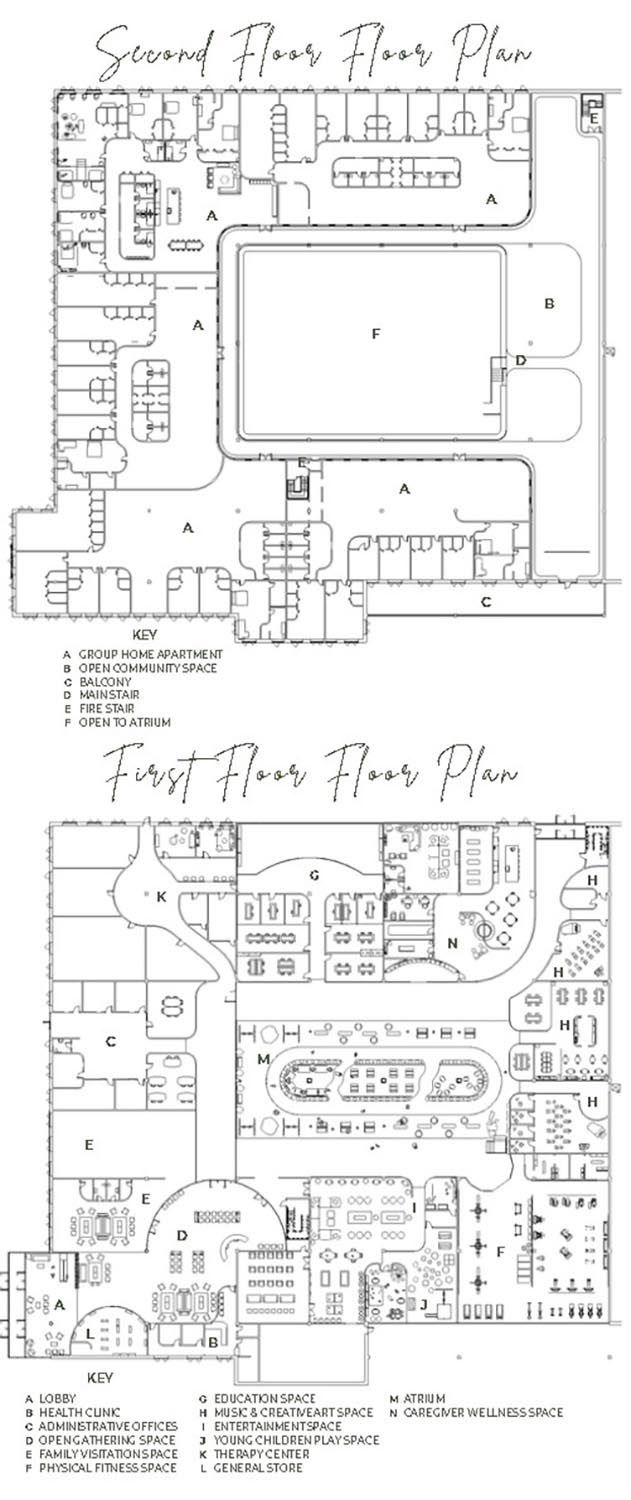
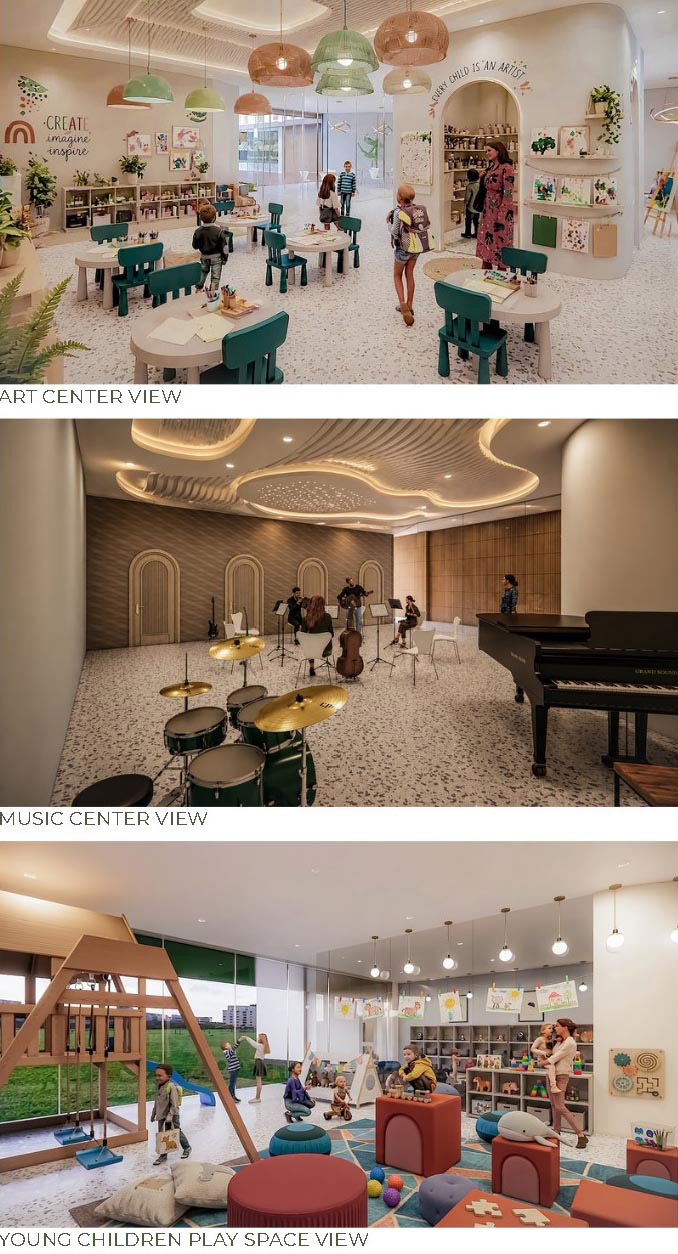
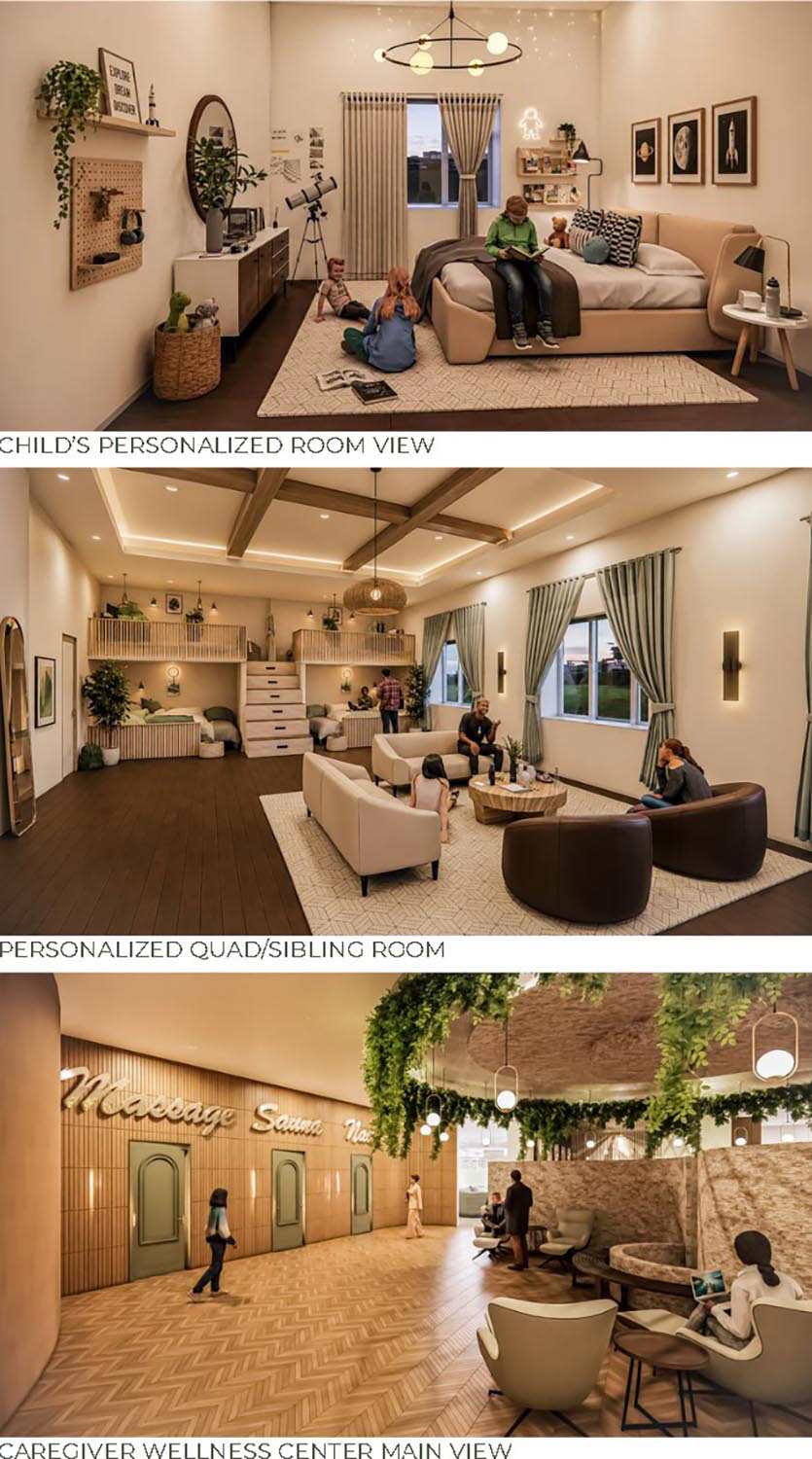
The design focuses on safety and emotional comfort, connection and community, independence and growth, and nature and inclusivity. It uses natural light, soft materials, calming colors, and child-sized elements to encourage emotional regulation and reduce overstimulation. Open layouts and clear sightlines foster trust and social ties, while flexible furniture and accessible storage support independence and daily skills. Spaces for therapy, learning, recreation, and caregiver wellness are included to promote overall well-being.
Through deliberate programming and spatial organization, Havenwood reimagines the foster care group home as a sanctuary of healing, stability, and belonging. This project demonstrates the potential of interior design to transcend basic functionality, fostering environments that empower residents, strengthen relationships, and restore dignity to both children and caregivers within the foster care system.