
Artist Biography
Alyssa Russo will graduate from Endicott College in the spring of 2026 with a BFA in Interior Architecture. During her time at Endicott, she has been recognized for her academic achievements, including earning a place on the Dean’s List, while consistently producing thoughtful and intentional design work. Alyssa has completed internships in both residential design and senior living environments, where she developed a strong foundation in professional practice, collaboration, and technical skills. Alyssa is driven by a belief that design should extend beyond aesthetics to respond to real conditions, real people, and real challenges. She is passionate about using design as a tool to address issues that shape everyday life, with a focus on how the built environment influences the way people live and interact. She approaches each project with a human-centered mindset, creating environments that encourage reflection, engagement, and improved quality of life. Balancing creativity with purpose, her work reflects a commitment to producing spaces that are not only visually compelling, but also meaningful, grounded, and responsive to real human needs.
Thesis Abstract
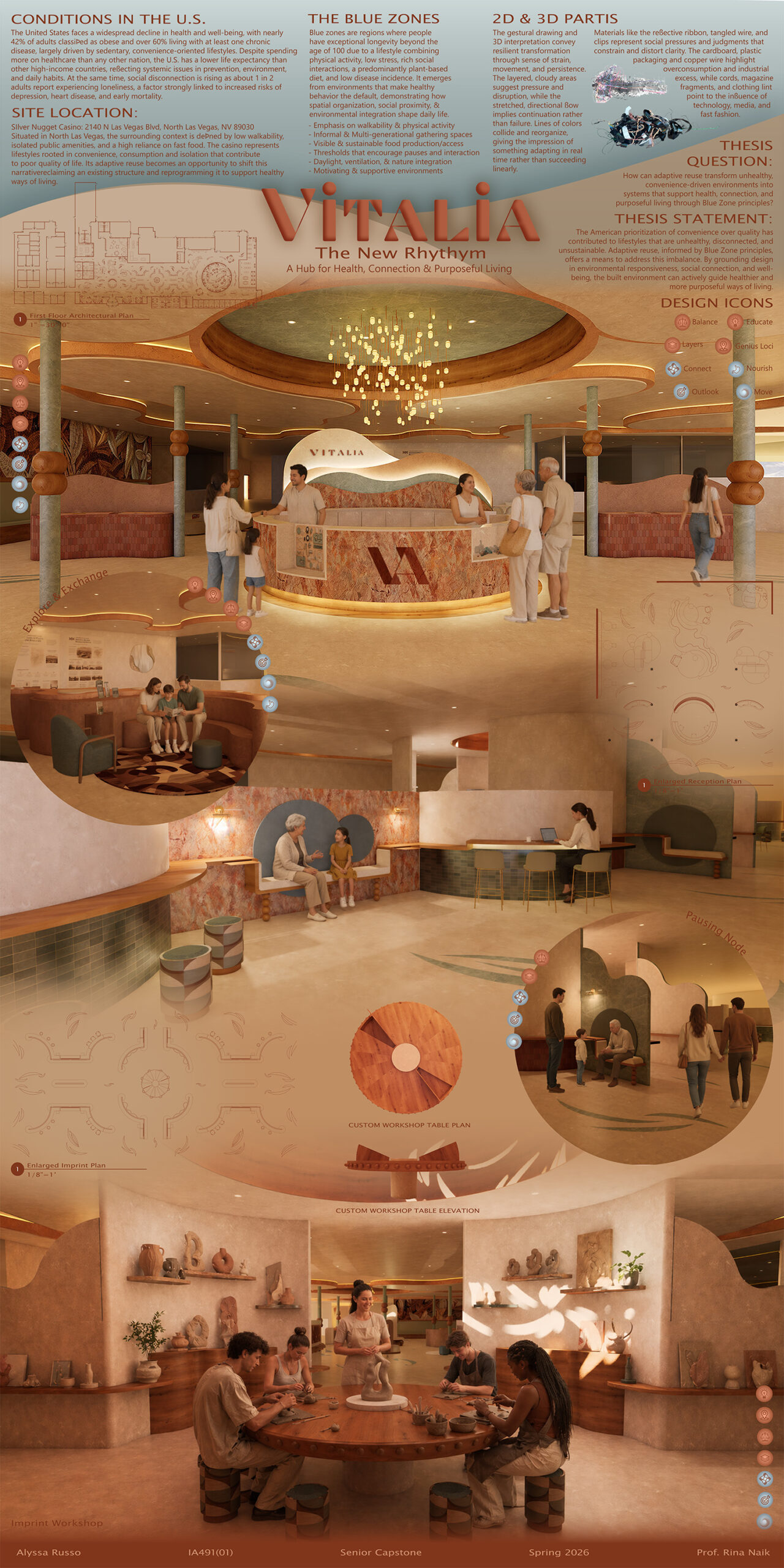
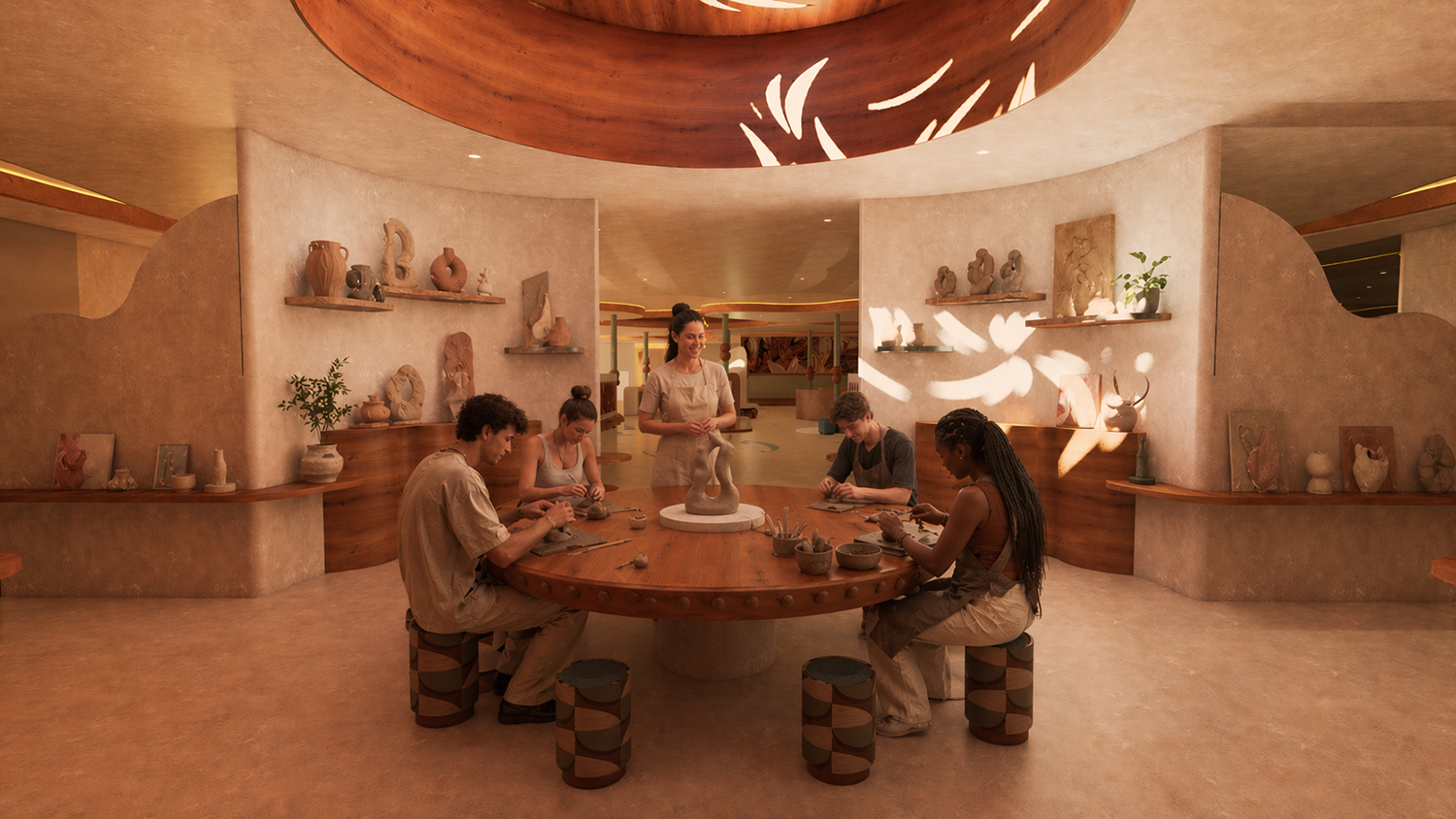
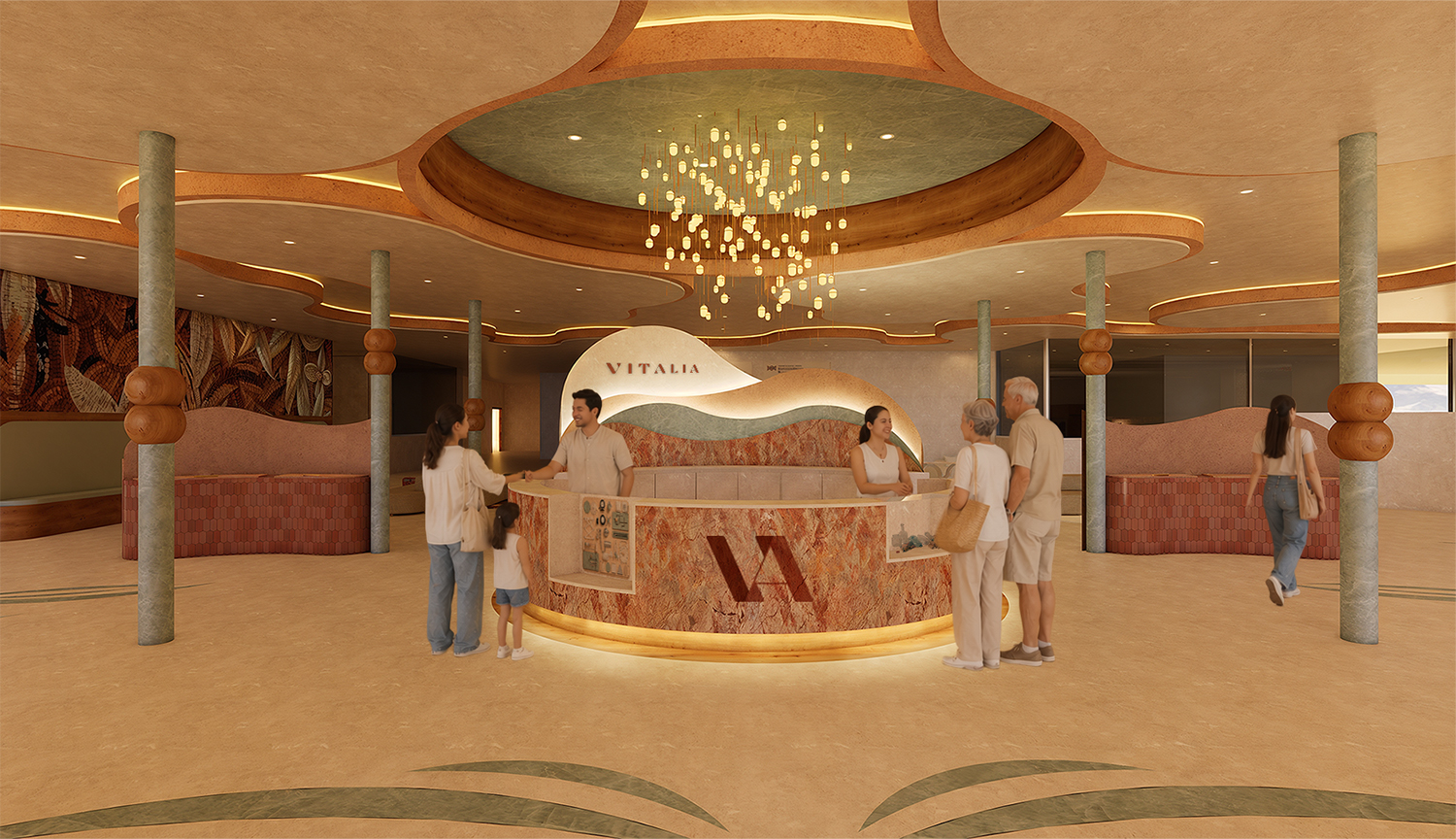
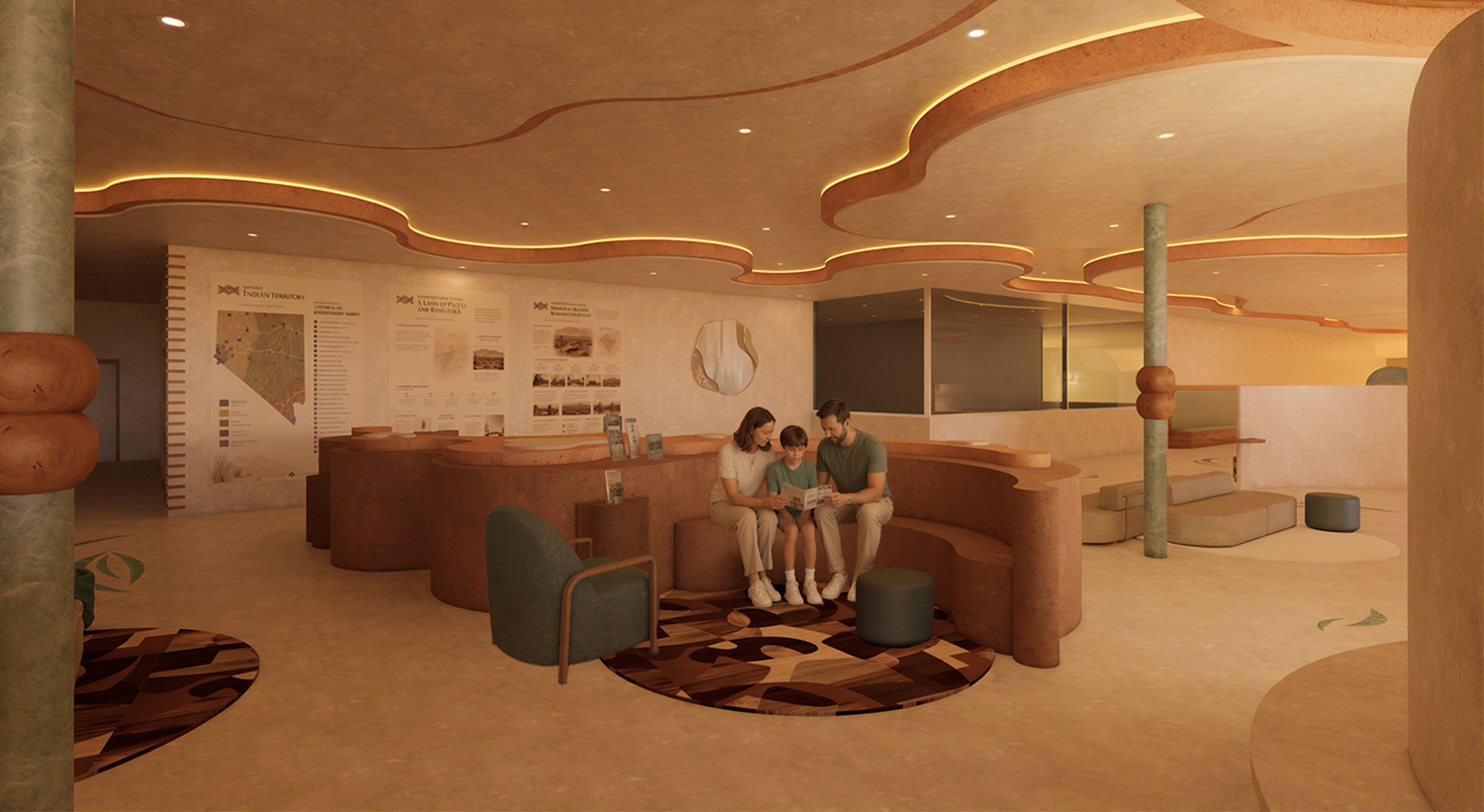
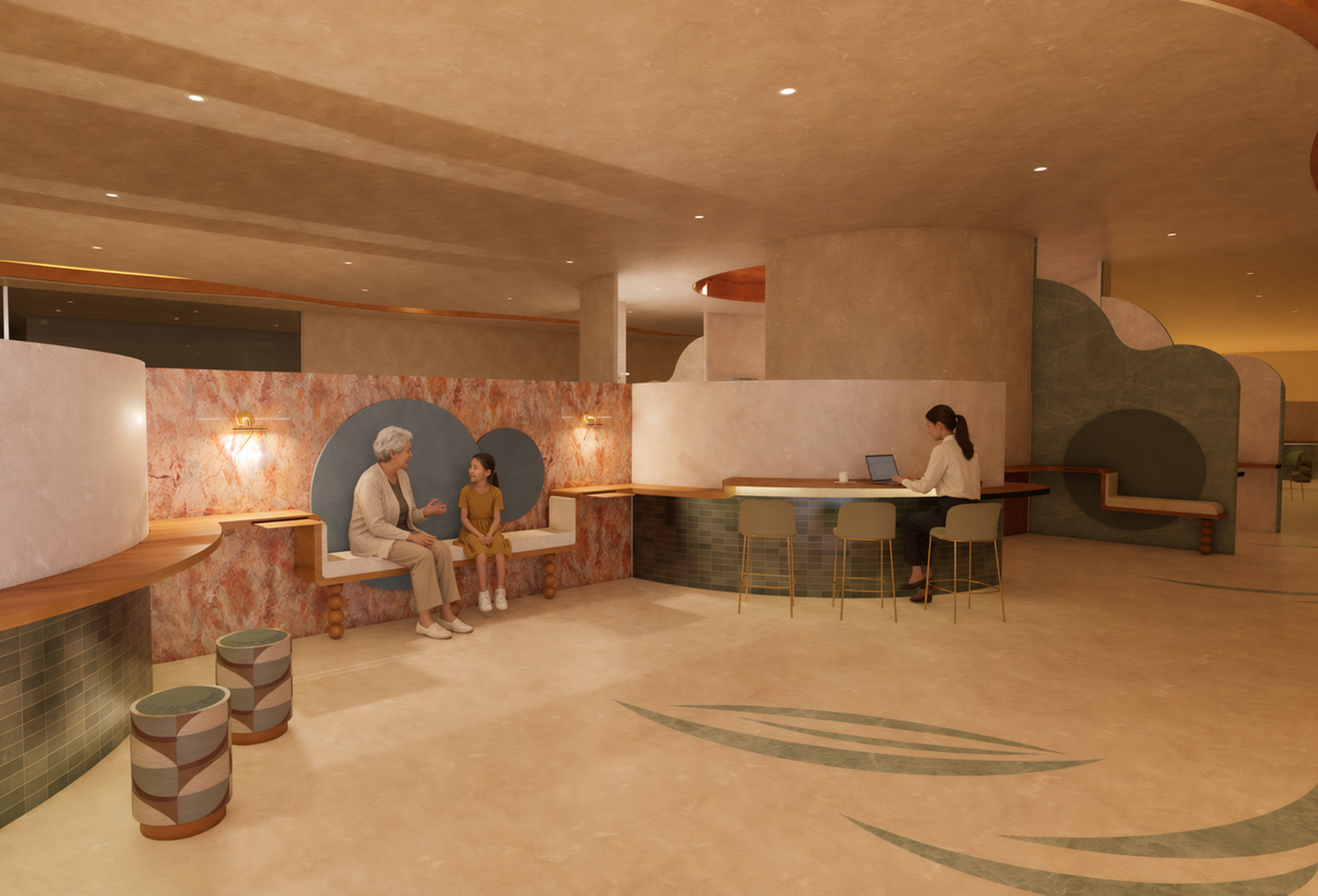
Contemporary built environments shaped by convenience, consumption, and technology have normalized patterns of isolation, inactivity, and disconnection, contributing to declining physical and mental well-being in the United States. Spaces designed for efficiency and ease often prioritize short-term comfort over long-term health, subtly reinforcing habits that limit movement, social interaction, and engagement with the surrounding environment. Vitalia explores how adaptive reuse can challenge these patterns by transforming an existing casino in North Las Vegas into a community-centered environment that promotes healthier ways of living. Guided by principles inspired by Blue Zones, the project reimagines a space rooted in excess and isolation as one that supports movement, connection, purpose, and overall well-being. Through intentional spatial organization and layered experiences, Vitalia offers an environment where healthier behaviors become the default. By shifting the role of architecture from a passive backdrop to an active influence, this project demonstrates how the built environment can foster a more connected, balanced, and resilient way of life.