
Artist Biography
Tegan O’Donnell will graduate from Endicott College in the spring of 2026 with a Bachelor of Fine Arts in Interior Architecture and a minor in Business Administration. During her time at Endicott, Tegan was a member of the Kappa Pi Art Honor Society, the nationally-ranked Women’s Rugby Team, and she was a Leadership Honors Scholar. She has been on the Dean’s List all four years, and during her freshman year, she was nominated for the Kravet Design of Distinction award for her residential design. She studied abroad during her junior year in Florence, Italy, and again during her senior year in Madrid, Spain. She completed her semester-long internship in Madrid at one of the most prestigious architecture firms in Spain, Estudio Lamela, where she contributed to and learned about large-scale, complex projects in transportation, sports, hotel, office, residential, and healthcare design. Tegan will continue her education at Endicott, pursuing a Masters of Interior Architecture degree.
Thesis Abstract
Relocating to a new country for employment can create a psychological conundrum where the promise of career development is often undermined by the loss of one’s sense of home, belonging and community. For young professionals, this transition can trigger a bittersweet spectrum of emotions, from loneliness and homesickness to excitement and adventure, that might significantly impact mental well-being and quality of life. To mitigate negative impacts, it is essential to establish “third places” that facilitate cultural immersion and social connection. By intentionally creating spaces that encourage community engagement, expats can bridge the gap between their past and present, successfully restoring their sense of belonging in a new environment.
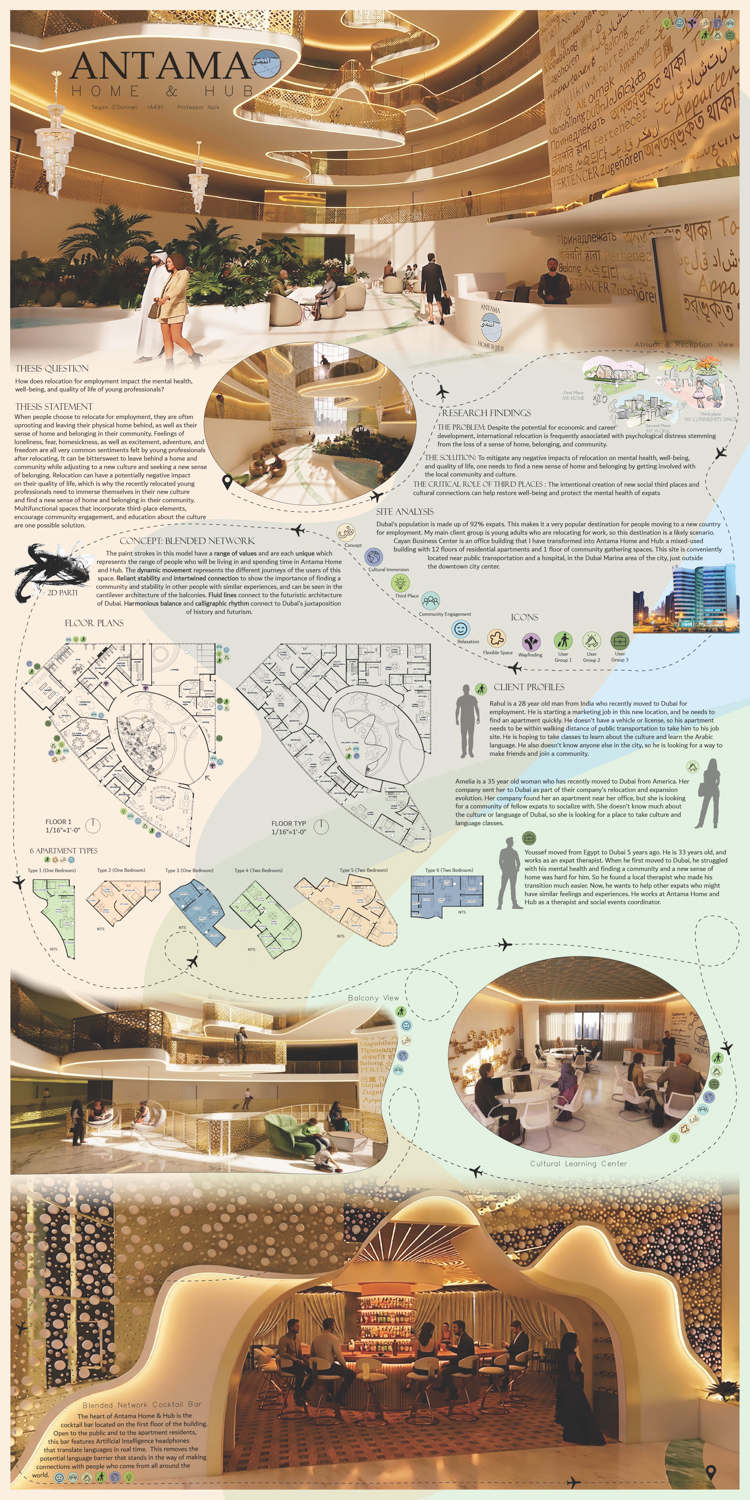
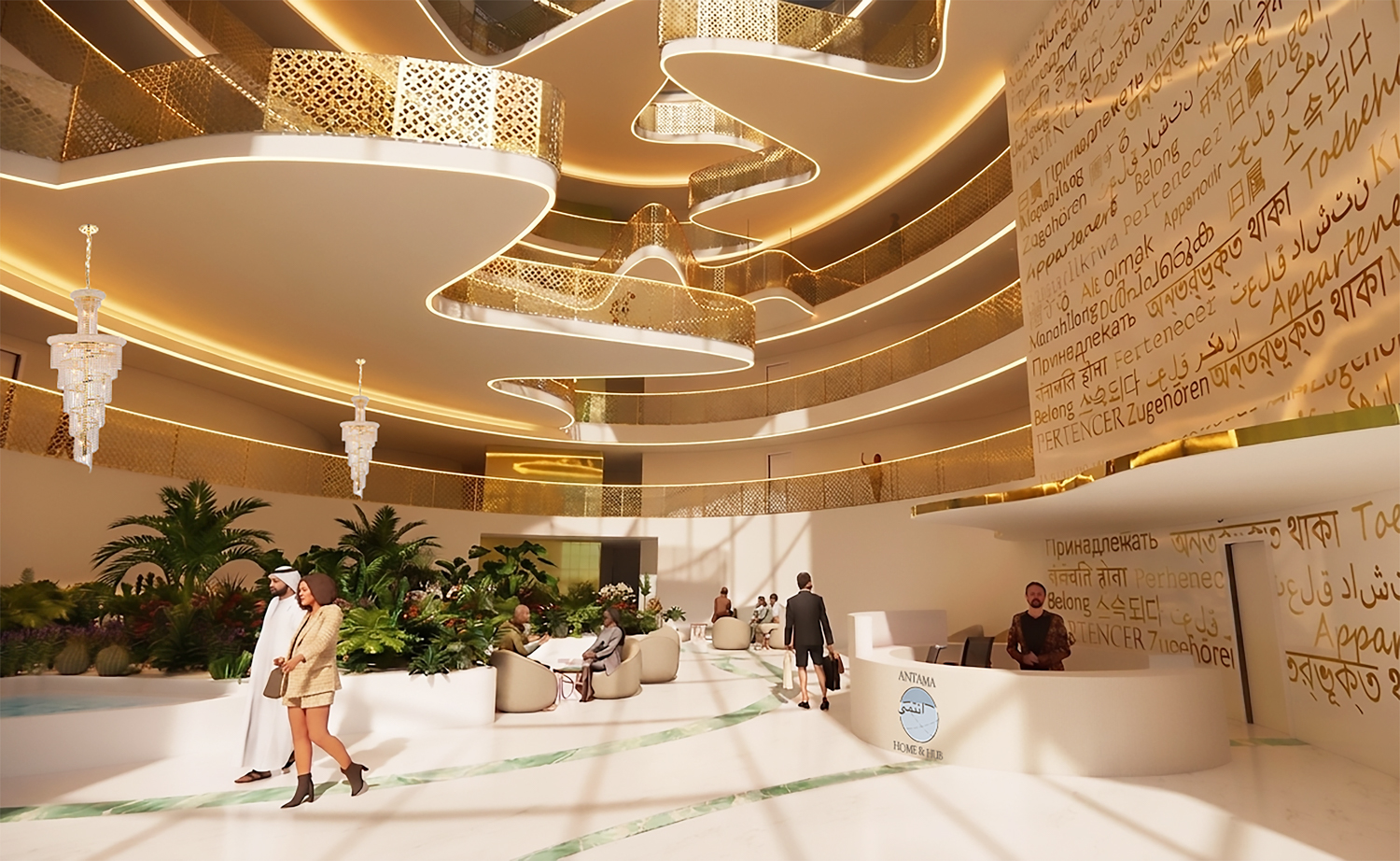
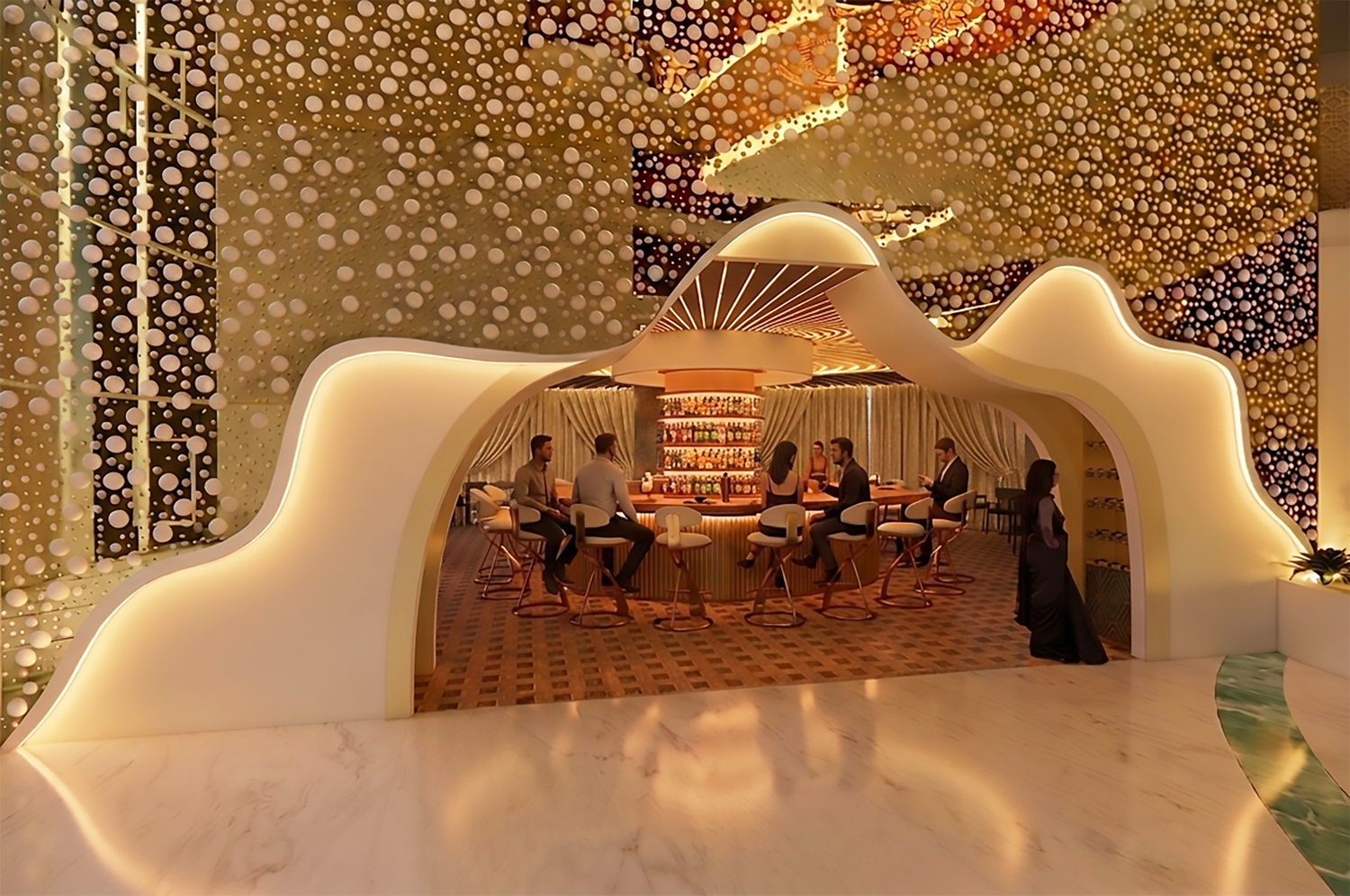
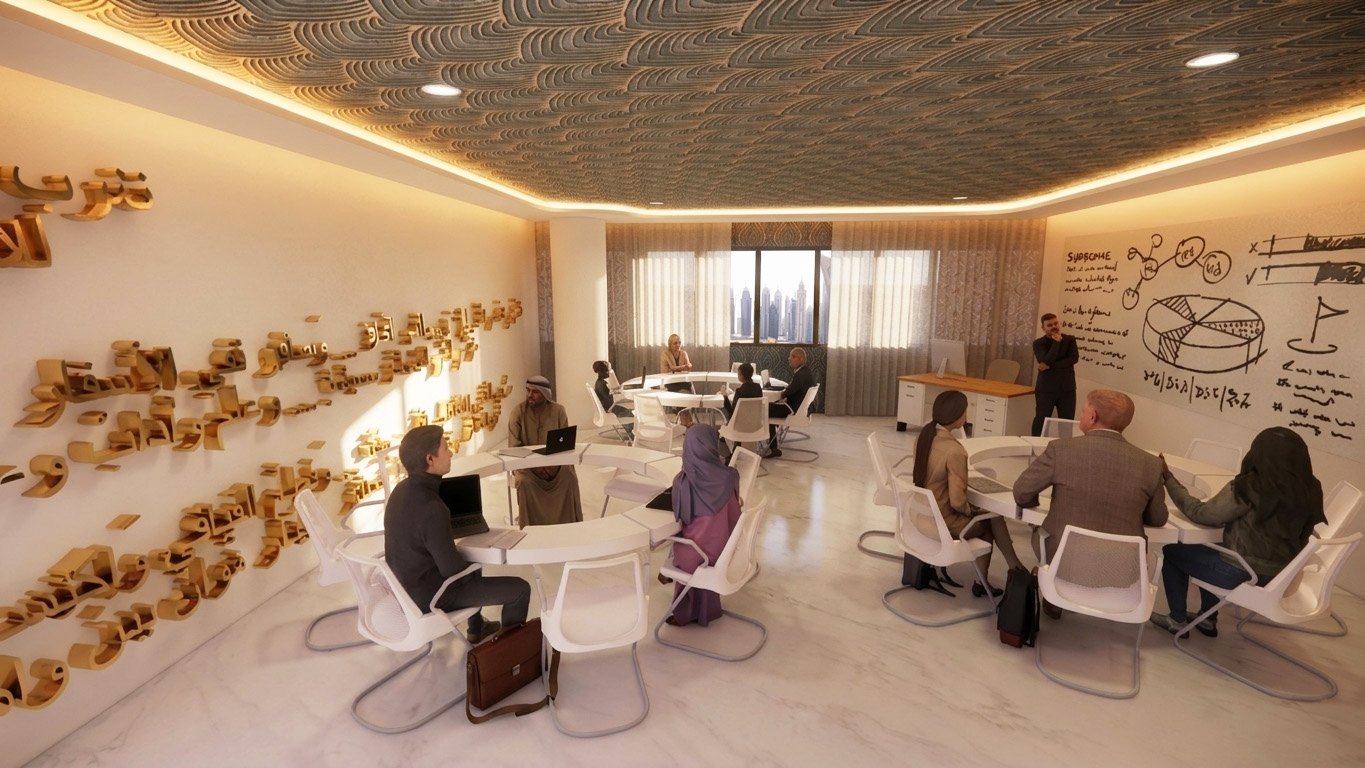
Antama Home and Hub addresses this challenge by transforming Dubai’s Cayan Business Center into a thirteen-floor apartment residence and community center designed for the city’s 92% expat population. The project is driven by the concept of “Blended Network,” represented by a 3D parti model. This concept translates human connection into architectural form through cantilevered balconies and fluid, rhythmic lines. These design elements represent the reliant stability found in shared experiences and the calligraphic rhythm that bridges Dubai’s futuristic identity with its historical roots. Ultimately, Antama Home and Hub serves as a space that empowers young professionals to move beyond displacement and find a permanent sense of home, belonging, and community.