

Artist Biography
Skylar Toro is an emerging designer at Endicott College, graduating in the spring of 2026 with a Bachelor’s in Interior Architecture and a minor in Construction Project Management. Throughout her college career, she has completed multiple internships, including one with SK+I Architecture in Bethesda, Maryland, where she will return after graduation as a full-time designer. From an early age, Skylar knew she wanted to be in the design field due to her appreciation for art and architecture. This love for design deepened through her experience and exploration abroad. This thesis displays creative problem solving, design informed by research, and technical skills to offer a new approach to memory care design, a topic near to her heart.
Thesis Abstract
Over 6.5 million people in the US currently live with dementia, a number projected to double by 2060. Dementia is a progressive cognitive illness that not only affects the patients, but also family care-takers. With approximately 70% of dementia patients living at home due to factors such as distrust in the healthcare system, costs, and comfort, family members assume the role of caretaker. Without the proper resources, time, and training, the burden on the family can lead to emotional, physical, and psychological decline.
While safety and security are essential components of the memory care facilities, this is often the primary focus, creating a mundane, restrictive, and institutional environment that neglects the patient’s needs for overall well-being and quality of life. A more successful environment for patients would be safe and secure, but would also encourage engagement and foster a sense of tranquility.
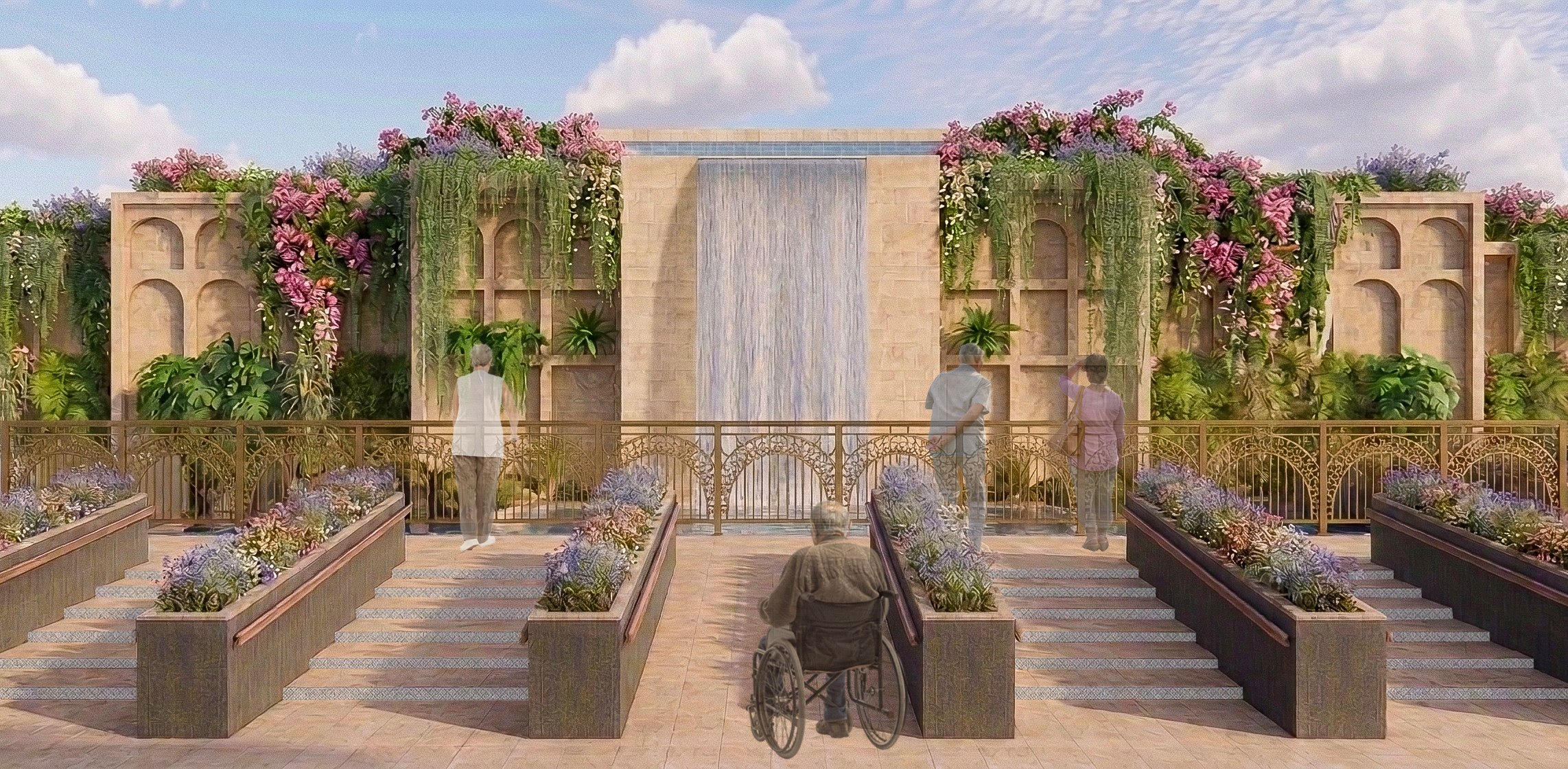
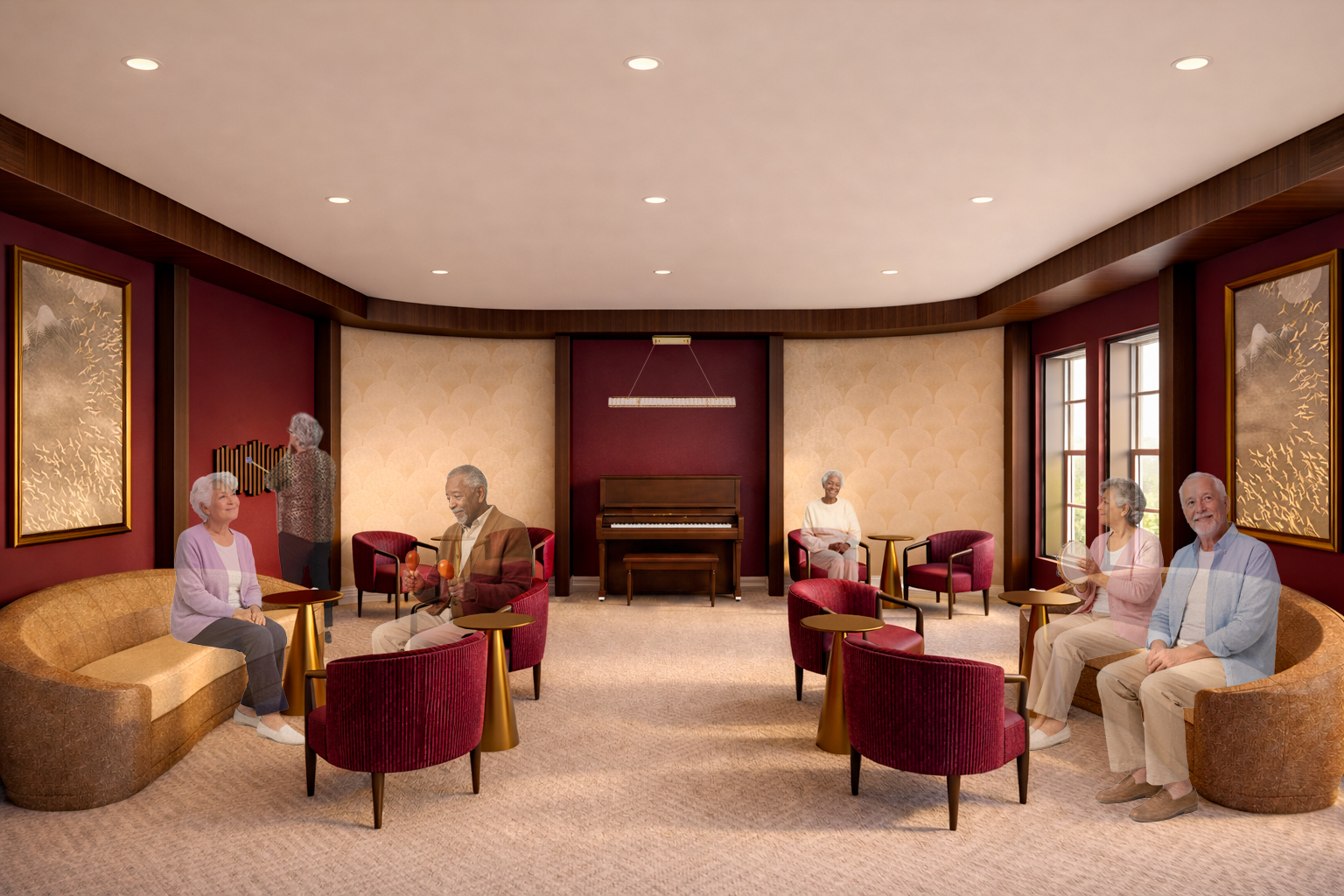
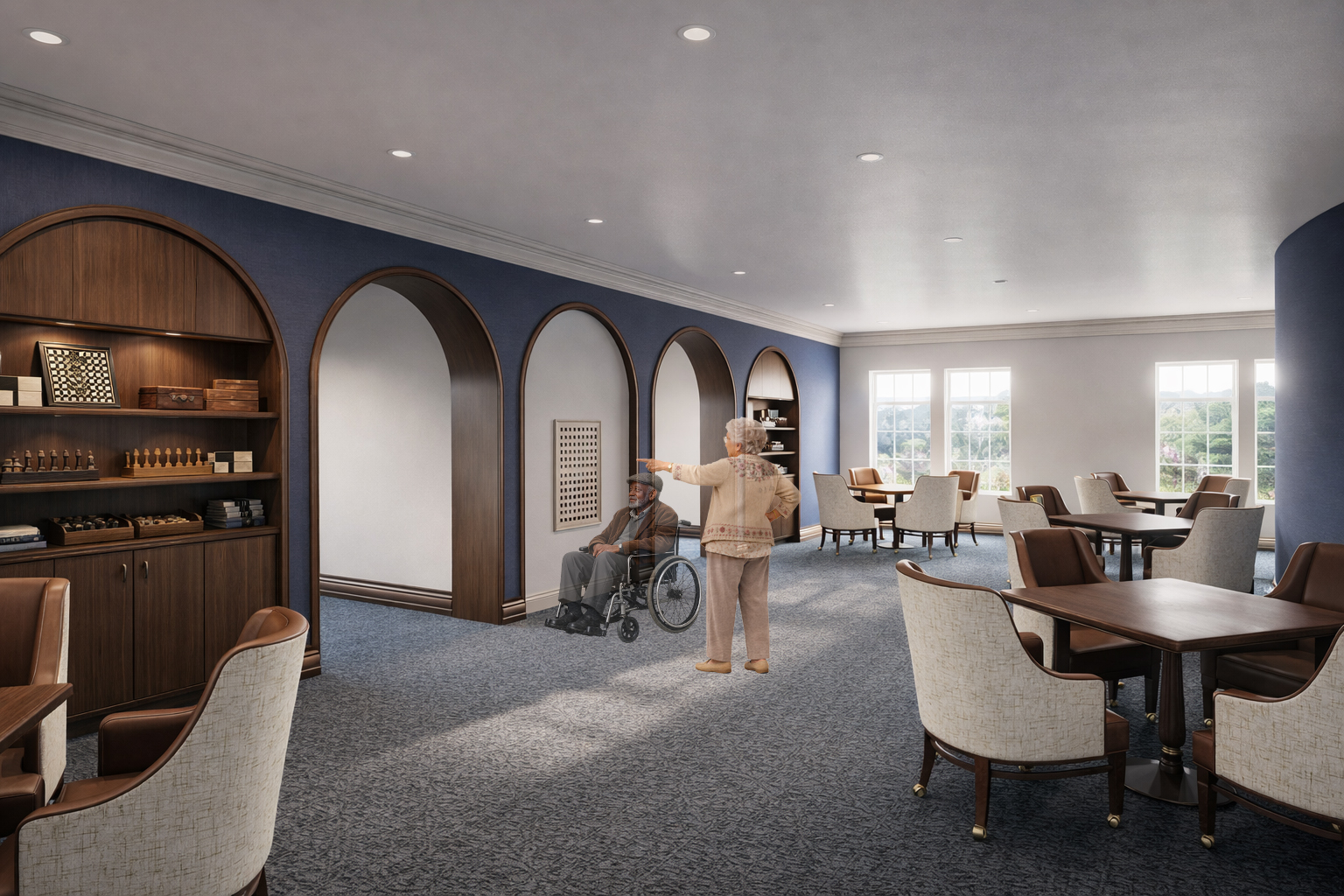
There are various non-pharmaceutical interventions that can help dementia patients such as cognitive stimulation therapy, music therapy, horticultural therapy, and opportunities for socialization among peers. When combined with design considerations such as intuitive and supportive wayfinding, seamless flooring transitions, high contrast materiality, senior living specified furniture, and circadian lighting solutions, these strategies can support daily living and maintain resident’s sense of autonomy and independence.
Through thoughtful design, a memory care facility can move beyond the bounds of containment and foster an environment that enhances both the resident’s quality of life and quality of care, while also supporting families.