
Artist Biography
I have participated in the visual and performing arts as long as I can remember, be it by writing stories, drawing, singing along to Disney songs, writing plays for my friends and I to perform, or taking dance lessons. If asked to choose a favorite art form, I would state that I loved each modality for its ability to express uniquely. Little did I know as a child, my perceptions were influenced by a condition known as synesthesia.
When I was 12, I made an offhand comment to my friend about how her voice looked more yellow than usual. I assumed that everyone saw colors and felt textures with sounds and music like me. My friend’s confused expression revealed that my perception of the world was atypical. Over time, I discovered I experience 11 types of synesthesia. At times, this sensory deluge can be overstimulating and result in feelings of anxiety. To explain my feelings and manage my responses, I created artwork in various forms as a grounding technique.
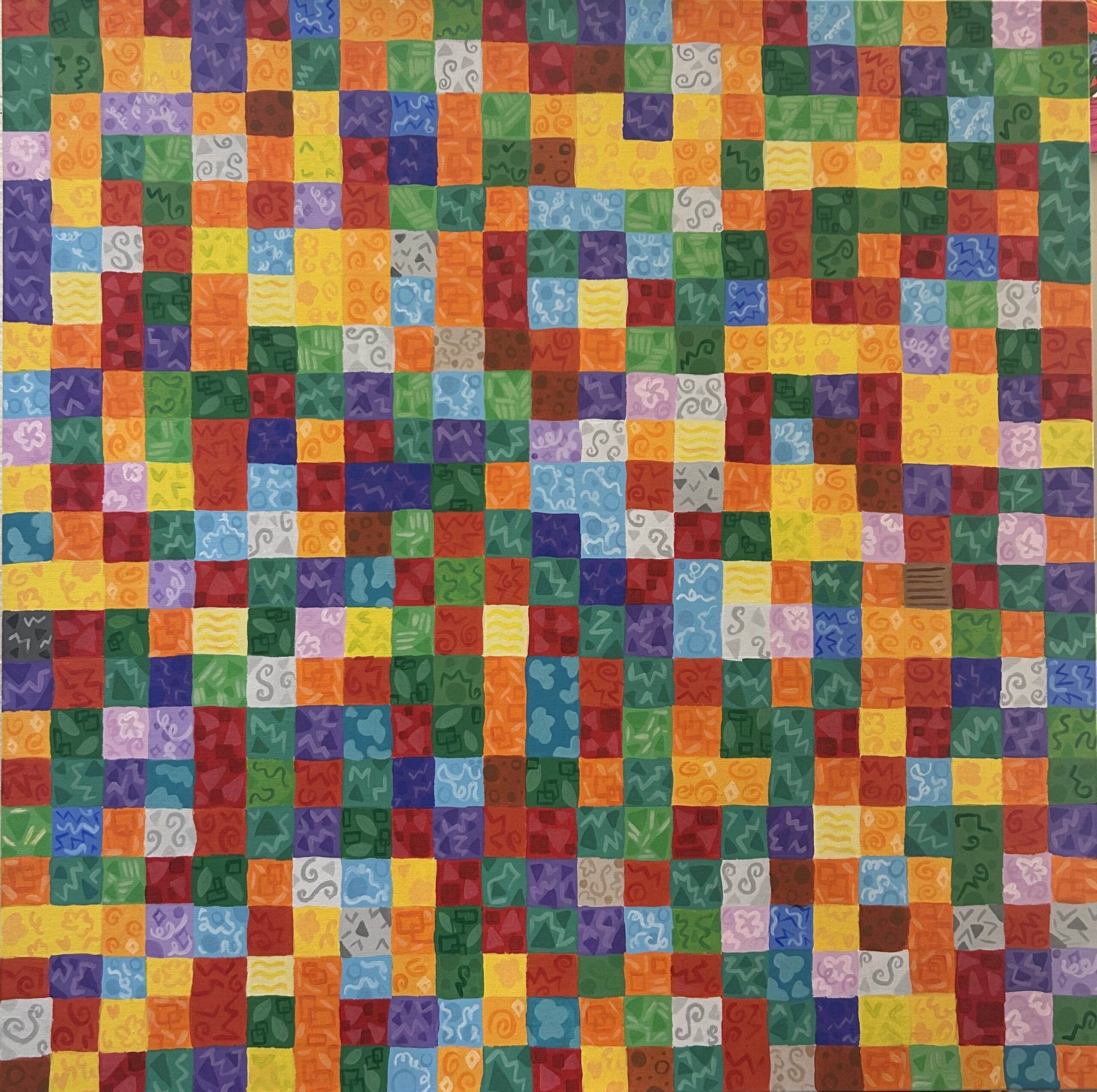
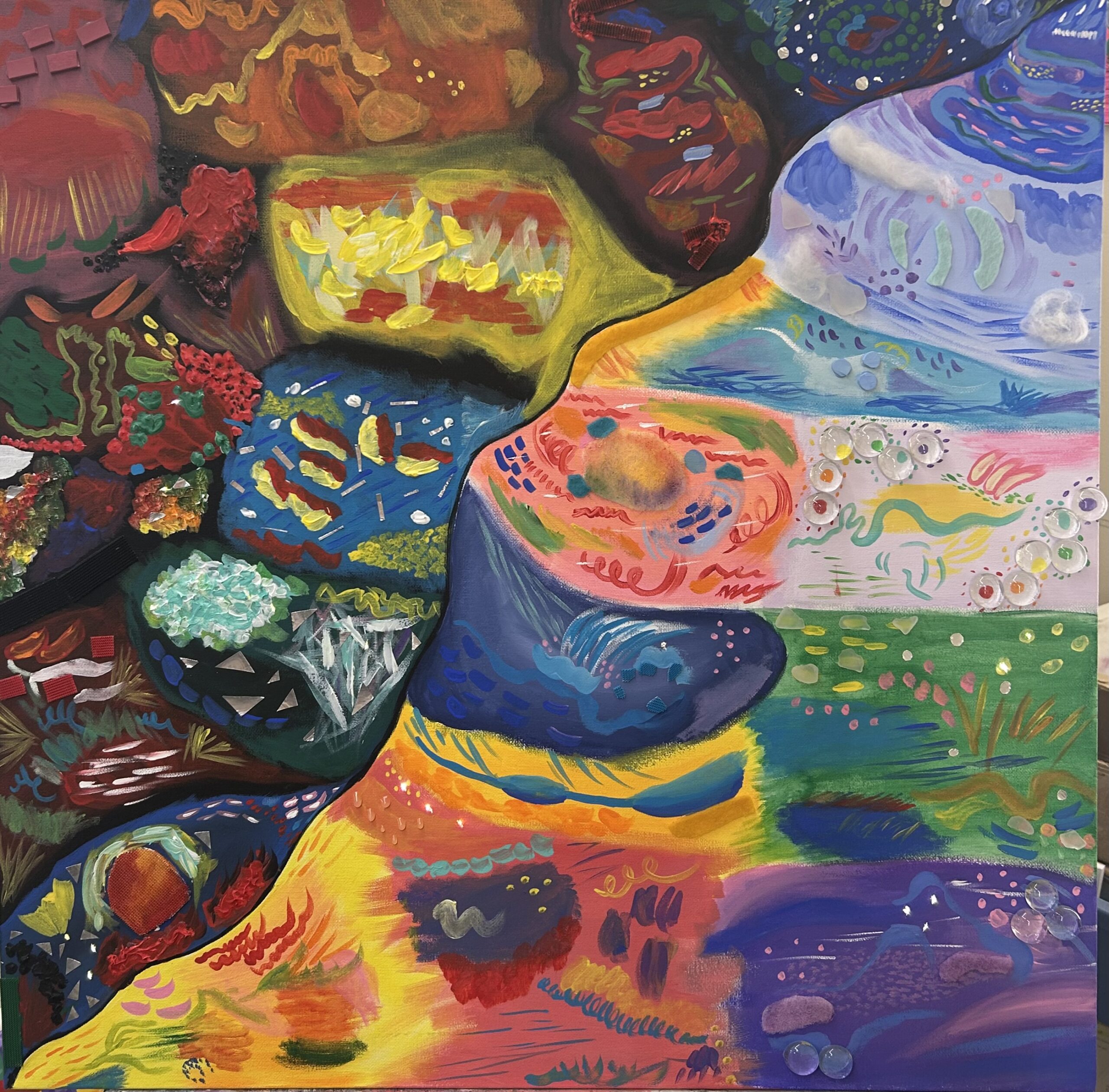
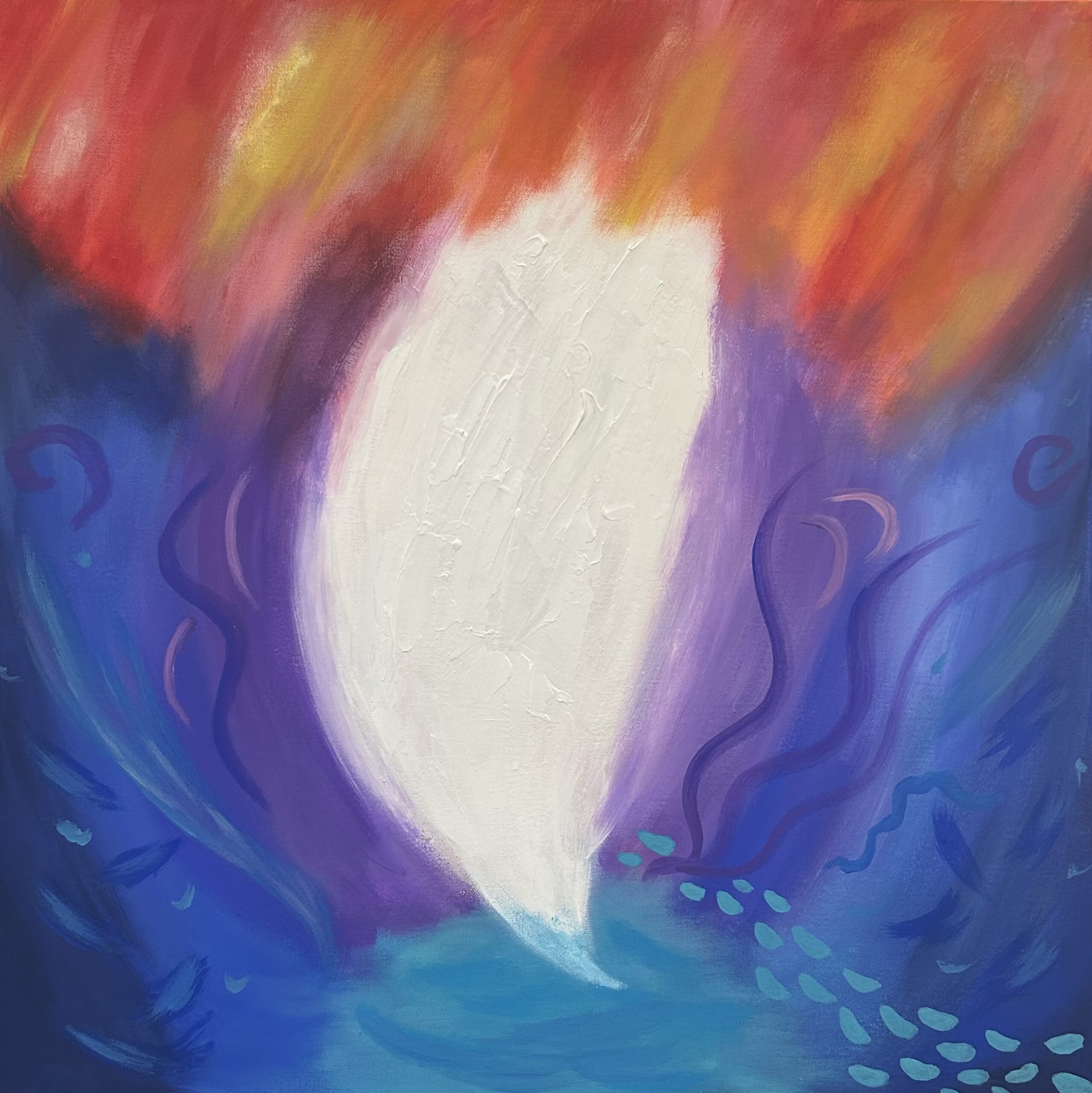
Synesthetes experience the world in full color, volume, and intensity continually. While this can be used as a tool for memorization and creativity, it also makes everyday life overstimulating and overwhelming. My study explores how art can be used therapeutically to manage the intense sensory stimuli a synesthete experiences every day. Three expressive arts processes were conducted, pairing poetry and painting, music and painting, and dance/movement, drumming and painting. Three distinct 24×24 inch paintings illustrate the multisensory ways my synesthesia presents itself. I invite all viewers, synesthetes and non-synesthetes, to engage interactively with the art, visualizing how the colors, shapes, and textures on the canvas articulate the corresponding auditory, written, and somatic stimuli. Viewers may manipulate the grapheme-color files to build synesthetic words, listen to audio prompts while touching textured paintings, and access QR codes to watch percussion/dance pieces.
Thesis Abstract
This thesis explores the connections between synesthesia, overstimulation, and an intermodal expressive arts therapy. Using synesthetic experiences as inspiration for art making can contribute to a greater understanding of one’s own synesthesia, as well as provide a method for grounding and regaining control over an overstimulating environment. Children with synesthesia are more likely to fall into a lower affective category than non-synesthete peers, which increases their tendency to display symptoms of anxiety. Additionally, neurodivergent individuals also experience sensory overload, a condition of intensified and overwhelming processing of sensory stimuli. This thesis aims to address how synesthesia and expressive arts modalities may be utilized to ease symptoms of sensory overload and anxiety related to synesthesia. In order to explore these aims, three integrated arts processes were conducted, pairing poetry and painting, music and painting, and dance/movement, drumming, and painting. Results include three distinct 24×24 inch paintings representing the multisensory ways a synesthete experiences everyday stimuli. The paintings include a variety of visual patterns and textured materials to convey a synesthetic response to environmental stimuli, while the engagement in the artistic process enables the synesthete to manage feelings of overstimulation and anxiety caused by their synesthesia. The implications and limitations of artmaking to understand synesthesia and its sensory and affective associations are discussed.