
Artist Biography
Emma Schaarschmidt is an emerging landscape architect and urban planner dedicated to creating meaningful, people‑centered environments. She is driven by a commitment to improving communities through thoughtful, culturally informed design. A passionate traveler, Emma seeks out authentic experiences around the world and integrates these global influences into her design approach. This curiosity and respect for diverse perspectives shape her ability to craft spaces that resonate with the people who use them.
After graduation, Emma will pursue her MBA with a concentration in construction management while serving as a Resident Director in Cork, Ireland. She looks forward to expanding her understanding of best practices, strengthening her leadership skills, and continuing to refine her design philosophy through new experiences and professional growth.
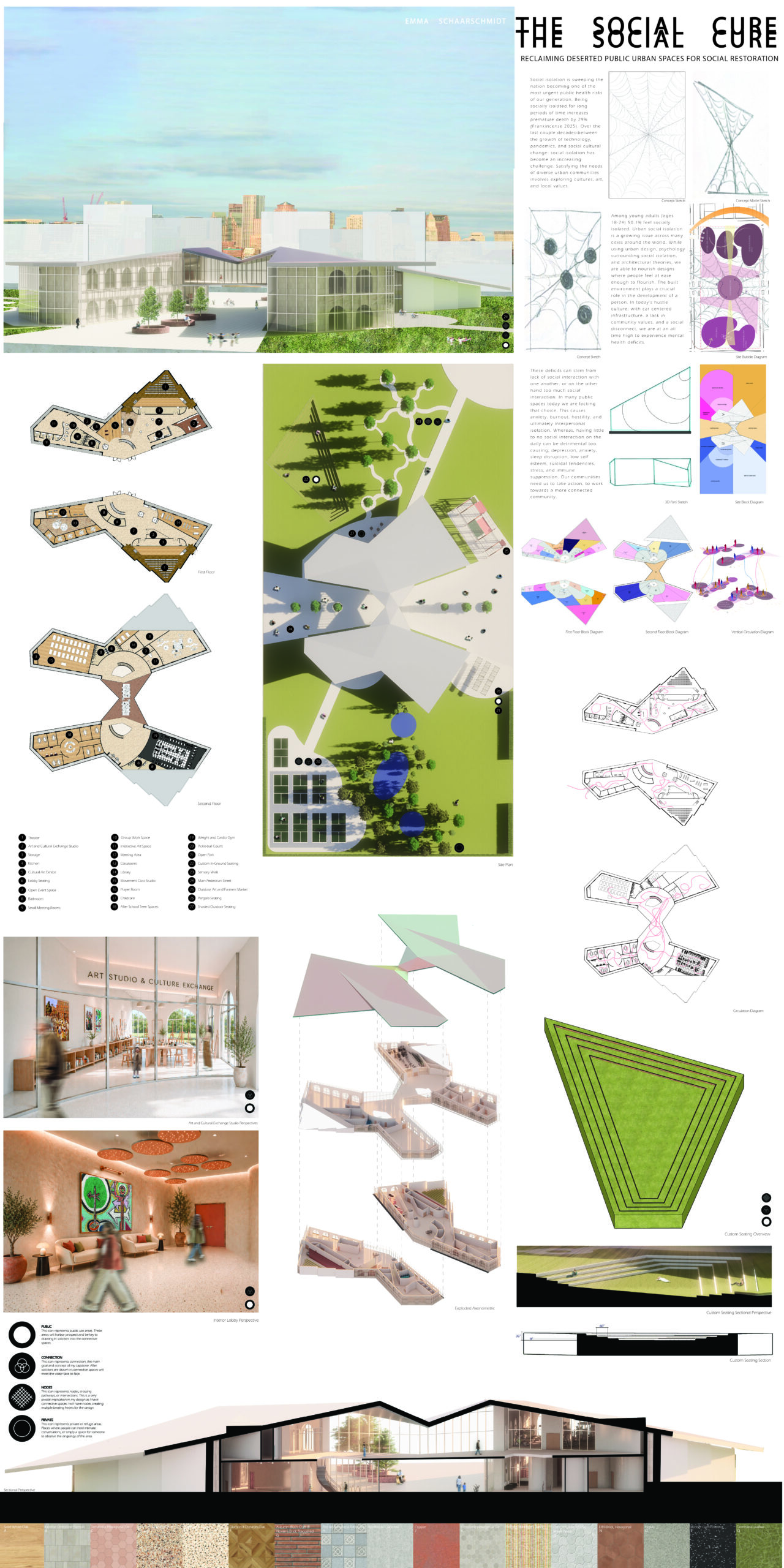
Thesis Abstract
This thesis investigates the profound impact that social isolation has on urban communities, challenging the assumption that dense, walkable environments naturally foster strong social connections. While cities like Boston’s South End appear well connected due to their physical proximity and diverse amenities, recent studies reveal a different reality: many residents experience increasing loneliness, weakened community ties, and limited access to inclusive public spaces. Dying parks, reduced opportunities for spontaneous interaction, and the pressures of urban gentrification all contribute to a growing sense of disconnection.
My work focuses on improving quality of life within the South End by understanding how the built environment can either reinforce isolation or actively counteract it. I began by examining existing research on social isolation, public‑realm design, and community‑driven planning to inform my own design justifications. This foundation allowed me to identify key environmental and social factors that influence how people interact with their surroundings and with each other.
A central goal of the thesis is to explore design solutions that strengthen community bonds. These solutions include creating flexible, ever‑changing public spaces that adapt to the needs of different users throughout the day and across seasons. Such spaces encourage repeated use, spontaneous encounters, and a sense of shared ownership. Strategies like multi‑functional plazas, interactive streetscapes, and revitalized parks can serve as catalysts for connection. Incorporating elements such as community gardens, outdoor seating clusters, and small‑scale gathering nodes helps foster casual social interaction and supports intergenerational engagement.
Additionally, the thesis considers how programming and policy can complement physical design. Community led events, pop up markets, cultural installations, and partnerships with local organizations can activate underused spaces and ensure that improvements reflect the needs of long term residents. Addressing gentrification pressures is also essential; equitable design practices such as preserving affordable housing, supporting local businesses, and ensuring accessible public amenities help maintain the social fabric of the neighborhood.
Ultimately, this thesis argues that combating social isolation requires a holistic approach that blends thoughtful design, community participation, and long‑term stewardship. By reimagining the South End’s public realm as a network of inclusive, dynamic, and socially supportive spaces, the project aims to create an environment where all residents feel connected, valued, and empowered.