
Artist Biography
One story of art and healing that inspired me came from my grandfather, who served as a deacon in a maximum-security prison in Florida. An incarcerated man gave him a delicate sculpture carved from soap, a fragile yet beautiful object created in a place of profound hardship. That moment riveted me, showing how creativity can transform even the harshest confinement into expression.
This experience drew me to clay as my medium. For me, clay offers a unique path to processing emotions through repetition and tactile release; the act of kneading and shaping becomes a form of self-regulation, where touch and time transform both the material and the maker.
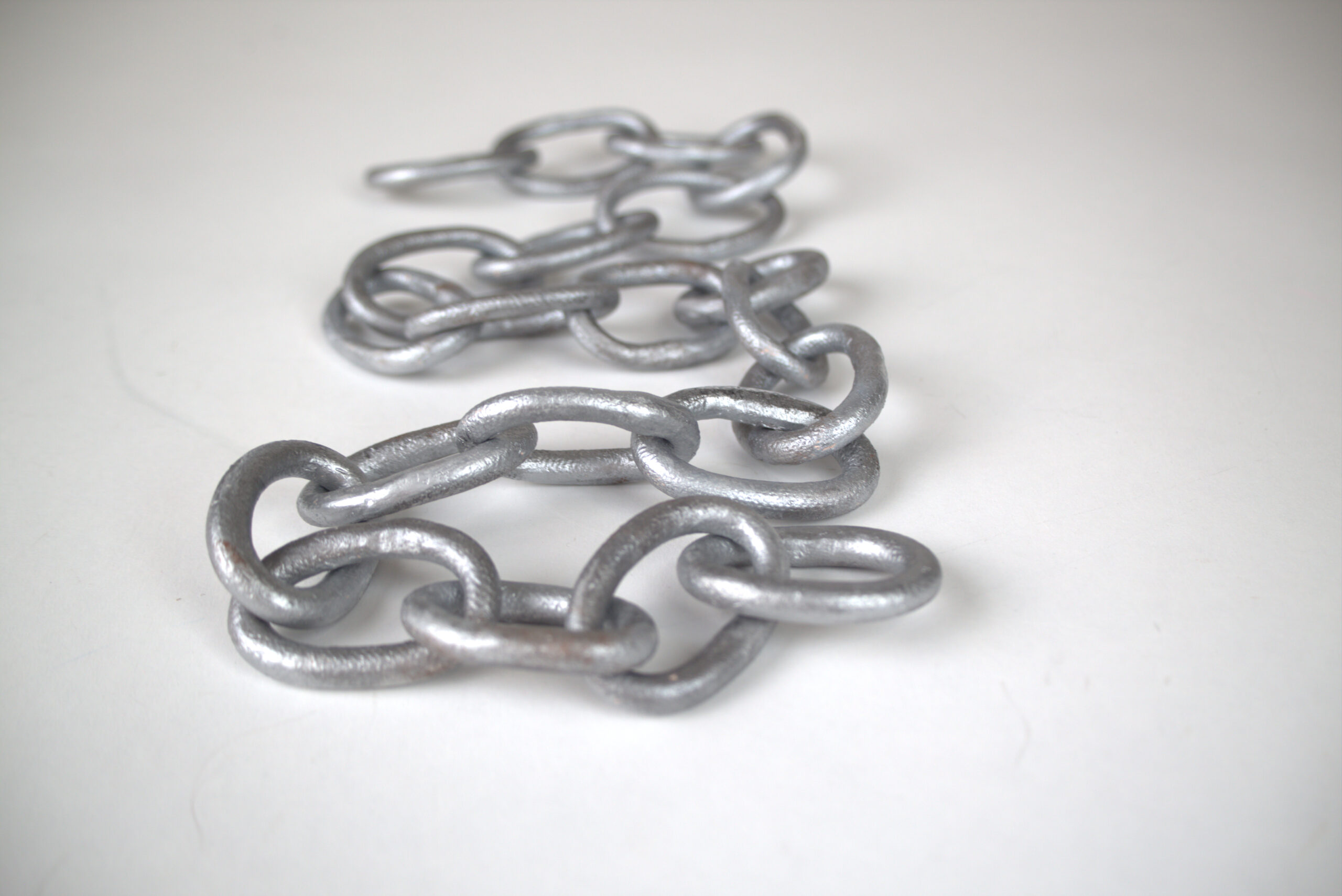
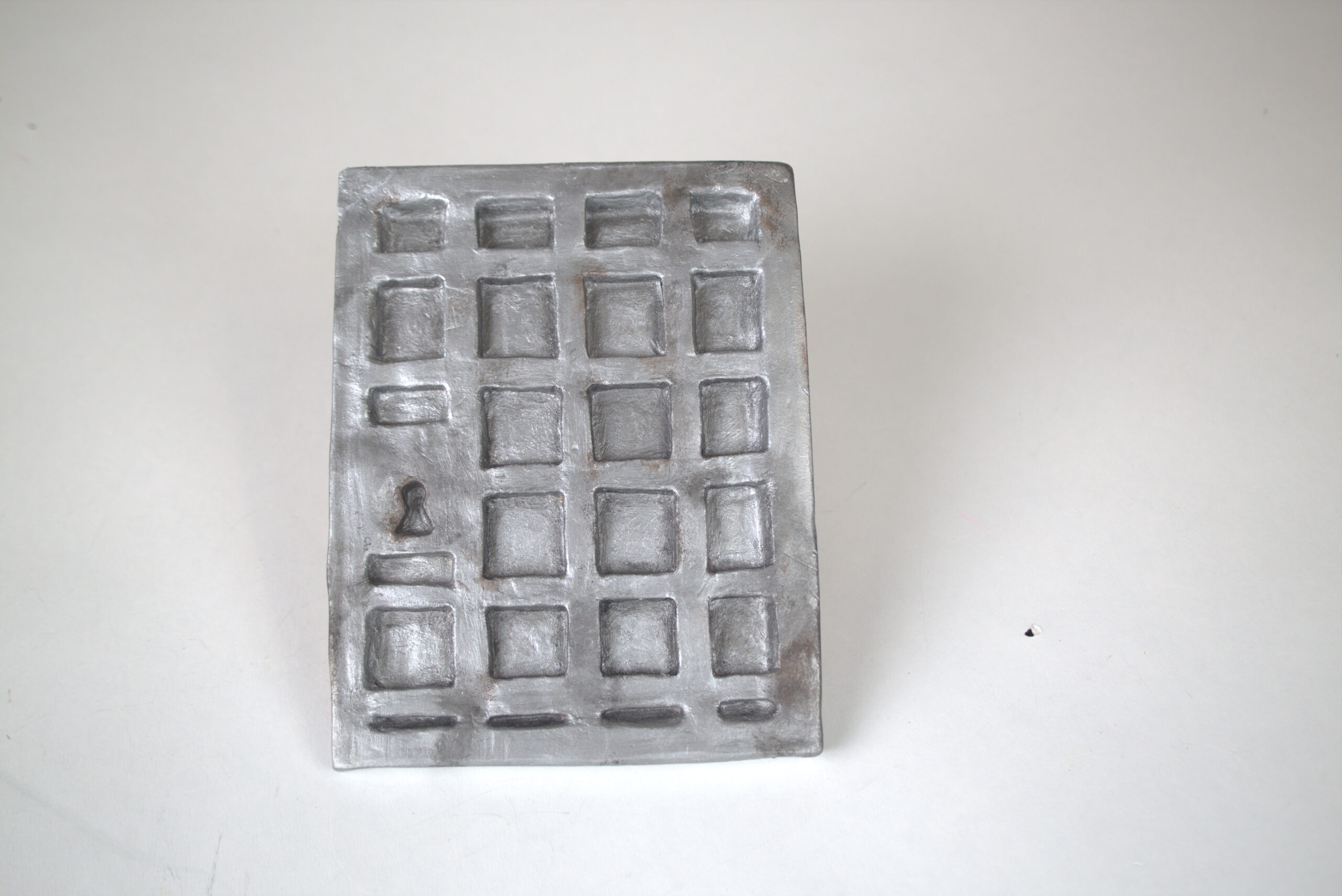
To explore my own feelings about prison environments and how those inside cope, I created a series of symbolic works in clay and wire: a prison door wall hanging, a silver-painted chain, and a soap sculpture enclosed in a wire cage. Through this process, I examined how material engagement and repetitive making can reflect both restriction and resilience.
While I invite viewers to find their own meanings, my personal connection centers on clay’s power to bridge confinement and transformation, mirroring the potential for inner growth amid external limits.
Thesis Abstract
This thesis explores the relationship between clay, emotional regulation, and confinement through an arts-based research process. Using clay, sketching materials, ceramic tools, glaze, and wire, I created a series of symbolic works inspired by prison imagery, including a prison door, a chain, and a soap sculpture enclosed in a wire cage. The project was guided by questions about how clay transformation can reflect internal emotional shifts, how repeated clay work can support self-understanding, and whether a daily creative routine can offer stability and grounding over time. The process took place in the senior semi-private studio and involved ongoing experimentation, journaling, revision, and adaptation in response to material challenges. A firing issue altered one of the original forms, which led to a shift from clay to wire for the cage structure and became part of the meaning of the work. The final pieces suggest that tactile, repetitive art-making can support mindfulness, emotional awareness, and reflection, even when technical setbacks require adjustment. This thesis contributes to art therapy by highlighting the therapeutic potential of sustained material practice and the role of creative work in understanding confinement, resilience, and transformation.