
Artist Biography
Eva Madysen Dolan is a senior Graphic Design student at Endicott College. She has had a passion for art and design ever since she can remember. In high school, after taking two graphic design courses, she knew that graphic design was the path she wanted to pursue. Additionally, making art for others and seeing how much it affects them has been the driving force behind every design and art piece she makes. She believes that if a couple strokes of paint or words on a page can hold so much weight, then every decision counts. With that in mind, another passion in Eva’s life has been activism, specifically speaking out through design about what she believes can change in the world. This backs a lot of her decision making and art/design process.
After graduation, Eva is looking forward to taking a year off to spend time with family, work, and create art. She is excited to pursue Graphic Design full time in 2027.
Design, art, and Eva cannot be discussed without crediting Kathryn Bousquet, Quinn Dolan, Fiona Dolan, Mary Keefe, Brian Keefe, and especially Michael Keefe. Without Kathryn and Michael, Eva would not be where she is today.
Portfolio: https://evamadysendolan.myportfolio.com/
Email: evad0423@icloud.com
Thesis Abstract
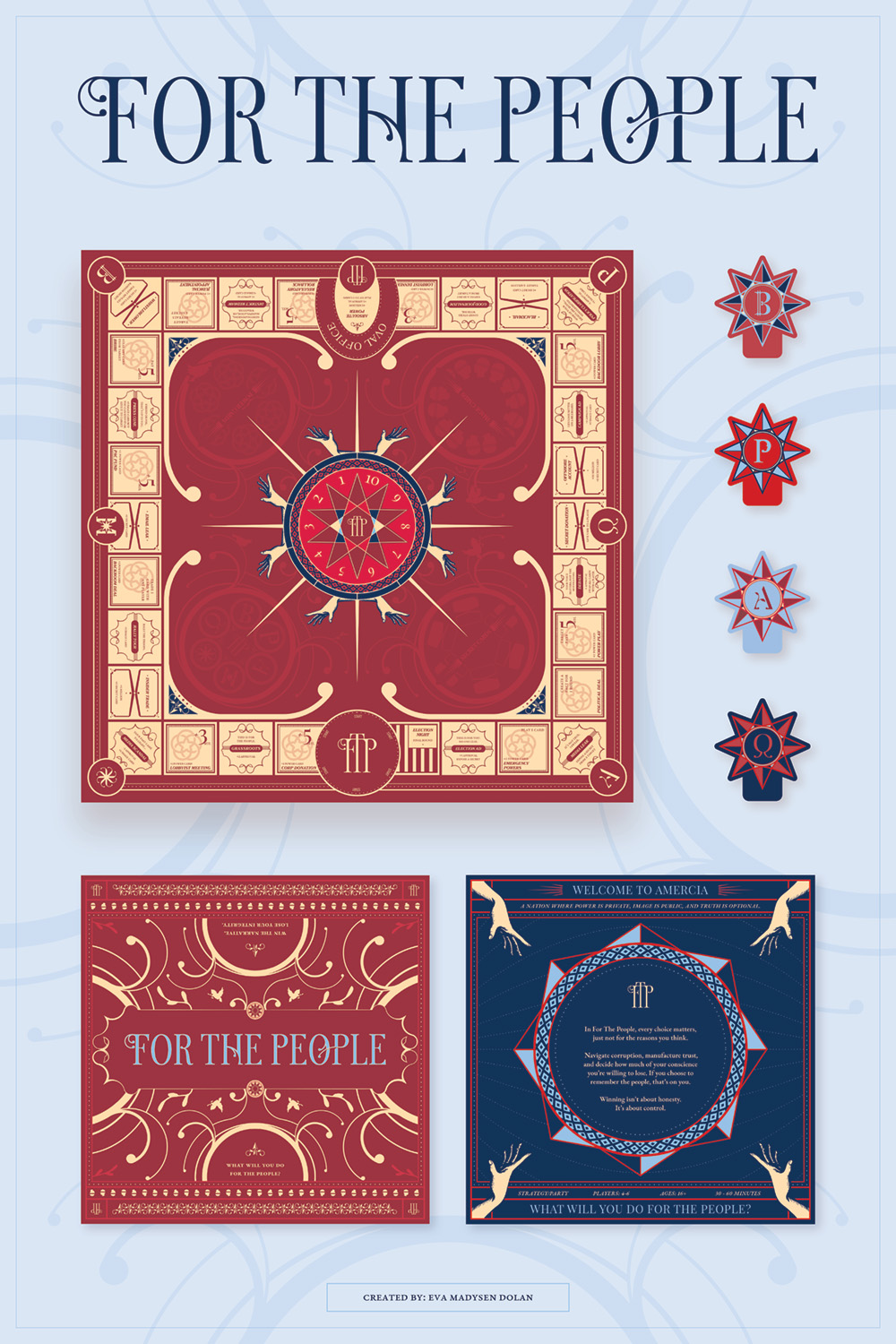
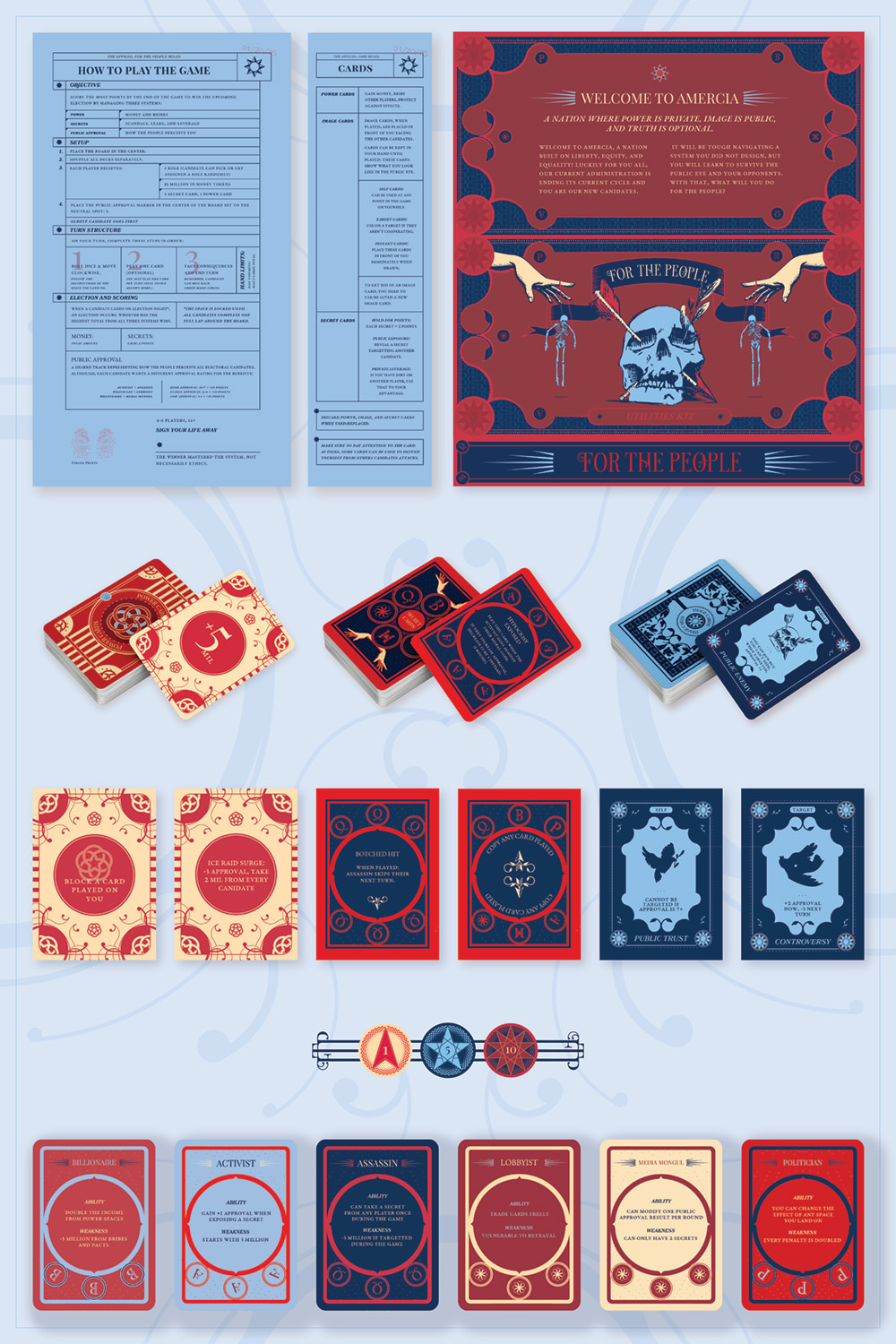
For The People is a satirical board game set in the completely fictional nation of Amercia where 4-6 players take on the roles of prospective presidential candidates, the Politician, Billionaire, Assassin, Media Mongol, Activist, and Lobbyist, competing to “serve the people” while secretly serving themselves. FTP explores and critiques modern political systems through interactive gameplay. By incorporating mechanics centered on corruption, deception, power accumulation, and public perception, the game positions politics as a strategic performance rather than a purely democratic process. Players are encouraged to make morally ambiguous decisions, weighing personal gain against public responsibility, though the system itself rarely rewards ethical behavior. It’s strategic, chaotic, uncomfortably reflective, and a tangible representation of how modern day political success is often determined not by integrity, but by one’s ability to navigate and manipulate the “rules” of the game. Ultimately, FTP invites players to examine their own ethical boundaries, question their role within these systems, and whether the people are something to represent, consider, or simply something to manage. By the end, players will confront one single question: Are you proud of what you did for the people?